
What Is an Industrial Friction Feeder (Paging Machine)? How to Choose High-Speed Pouch & Carton Feeders for Date Coding & OCR Vision Inspection
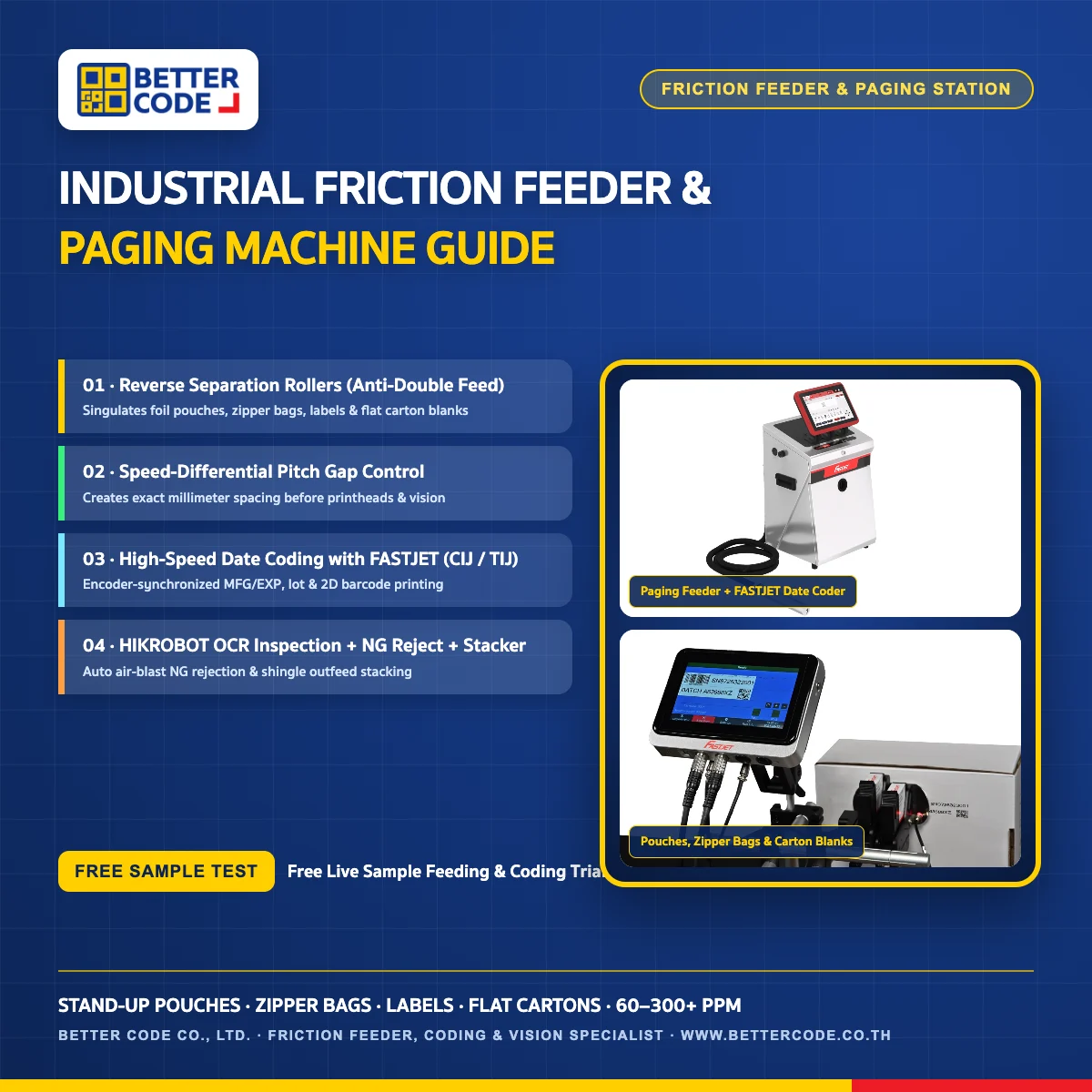
What Is an Industrial Friction Feeder (Paging Machine), and Why Do Factories Printing Date Codes and Running OCR Vision Inspection on Pouches, Labels, and Flat Cartons Replace Manual Hand-Feeding?
An industrial Friction Feeder (Paging Machine) automatically singulates stacked flat products—such as foil pouches, stand-up zipper bags, labels, and folded carton blanks—into a single-file stream with millimeter-consistent pitch spacing on a date coding conveyor. Replacing manual hand-feeding eliminates skewed codes and double-feeds while enabling high-speed FASTJET date coding and 100% HIKROBOT OCR vision verification.
4-Way Flat Product Feeding Comparison: Manual Hand-Feeding vs Standard Paging Feeder vs Zipper Pouch Differential Feeder vs Closed-Loop OCR & Reject Station
In food, pharmaceutical, cosmetic, and contract-packaging plants that pre-code empty pouches, labels, or flat cartons prior to filling, matching your industrial friction feeder (paging machine) to package thickness geometry is decisive. The engineering matrix below compares the 4 primary configurations:
| Feeding & Paging Configuration | 1. Best-Fit Flat Products | 2. Real-World Speed (PPM) | 3. Anti-Double-Feed Mechanism | 4. Print Registration & Pitch Gap Accuracy | 5. OCR Verification & NG Rejection | 6. Labor Requirement & Operational ROI |
|---|---|---|---|---|---|---|
| 1. Manual Hand-Feeding on a Basic Belt (Operator Placing Single Sheets by Hand) | Ultra-short sample runs or irregular novelty packs requiring constant manual handling | Very Slow (20–40 ppm per operator); throughput drops sharply due to hand fatigue | Manual finger fanning (static electricity frequently causes two pouches to stick together, leaving the bottom pouch unprinted) | Poor (★★☆☆☆) Skewed placement and erratic gaps cause crooked or clipped date codes | Human eyes cannot verify codes at continuous belt speeds, risking unprinted pouches escaping to filling lines | Ties up 2–3 operators all day fanning and Restacking pouches; highest hidden labor cost |
| 2. Standard Belt Paging Feeder (Friction Belt Paging Machine + SUS304 Conveyor) | Flat paper labels, cards, pharma sachets, and uniform flat foil pouches with even thickness | Medium to High (80–250+ ppm) with VFD inverter speed control | High-friction feed belts paired with a micrometer gate gauge hold back the second sheet in the hopper | High (★★★★☆) Delivers repeatable lateral alignment past FASTJET CIJ and TIJ printheads | Can be retrofitted with leading-edge triggers and vision sensors as needed | One operator easily tends the hopper; rapid payback for flat labels and uniform pouches |
| 3. Differential Roller Friction Feeder for Zipper / Stand-Up Pouches (Heavy-Duty Multi-Roller Separation) | Stand-up pouches, resealable zipper bags, thick laminated bags, and unfolded carton blanks | High & Consistent (100–300+ ppm) even on contoured or heavy-gauge pouches | Excellent (★★★★★) Combines urethane feed wheels with a Reverse Separation Roller and dual micrometer adjustment to prevent double-feeds | Superior (★★★★★) Repositionable feed wheels straddle thick zipper tracks so pouches exit straight without yawing | Generates clean, repeatable pitch gaps required for inline barcode and OCR vision cameras | Eliminates the #1 bottleneck in flexible packaging plants where basic belt feeders jam on zipper bags |
| 4. 3-in-1 Closed-Loop Print, OCR Inspect & NG Reject Paging Station (Turnkey Zero-Defect Paging Line) | Export food pouches, medical device packs, pharmaceutical cartons, and high-compliance labels requiring Zero Defects | Up to 120–300+ ppm with automated Shingle Stacking Conveyor outfeed | Maximum (★★★★★+) Reverse separation rollers + encoder-based double-sheet length detection | Millimeter-Locked (★★★★★+) Quadrature shaft encoder + top hold-down / vacuum-stabilized SUS304 conveyor | 100% Inline Verification: HIKROBOT OCR camera grades every date code and triggers PLC pneumatic NG rejection | Replaces manual feeding and visual QC while preventing costly retailer recalls or export lot rejections |
Engineering Mechanics of an Industrial Friction Feeder: How High-Speed Singulation Prevents Double-Feeds
How does an industrial friction feeder (paging machine) pull the bottom sheet from a stack of 300–500 pouches or carton blanks at 200–300 pieces per minute without dragging the second sheet along? The secret lies in three synchronized mechanical engineering principles:
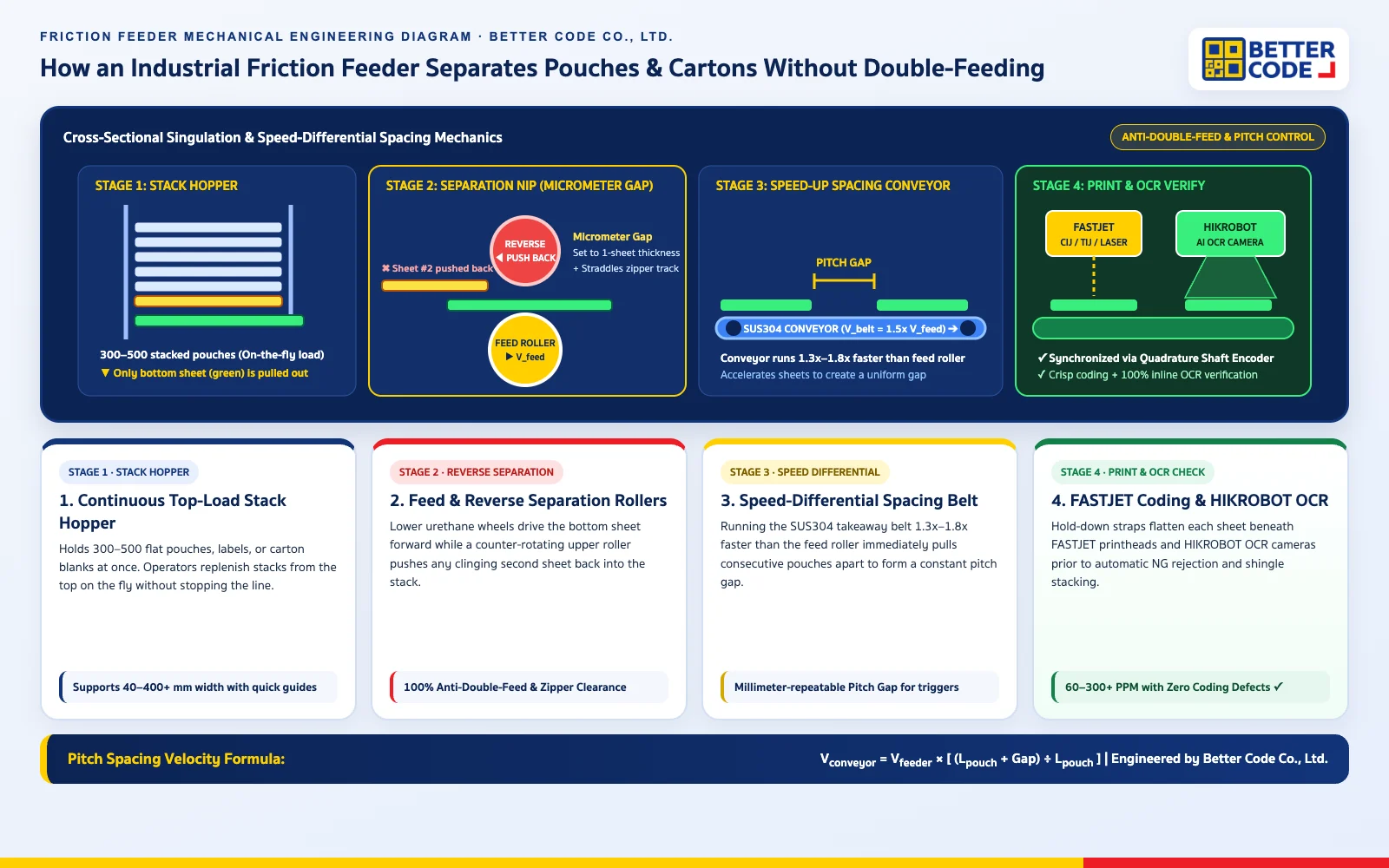
High-Grip Feed Roller Paired with a Counter-Rotating Separation Roller
Beneath the stack hopper, a high-friction urethane Feed Roller rotates forward to drive the bottom sheet out. Directly above it, a Reverse Separation Roller (or Gate Roller) rotates in the opposite direction with calibrated slip torque.
• The bottom pouch contacts the high-grip lower roller and accelerates forward.
• Any second pouch clinging via static electricity hits the counter-rotating upper roller and is positively pushed back into the hopper stack!
Dual Micrometer Gate Adjustment & Contoured Zipper Clearance
Paper labels (0.08 mm), laminated foil pouches (0.15 mm), stand-up zipper bags (1.5–3.0 mm at the zipper), and unfolded carton blanks (1.0–2.5 mm) vary dramatically in thickness. Industrial feeders provide independent left/right Micrometer Gate Gauges with 0.05 mm resolution.
• Our engineers position split feed wheels along the flat pouch body while straddling the thick zipper track—ensuring pouches exit straight without yawing or jamming.
Speed-Differential Takeaway Conveyor Creates Exact Pitch Gaps
As soon as the leading edge of a singulated pouch clears the separation nip, it enters a SUS304 date coding conveyor running at a belt velocity (Vbelt) set 1.3x to 1.8x faster than the feeder roller speed (Vfeed).
• The velocity step-up immediately accelerates the leading pouch away from the trailing pouch, generating a millimeter-repeatable Pitch Gap before the printhead and vision camera!
Engineering Formula: Calculating Conveyor Speed Differential for Exact Pitch Spacing
To give optical trigger sensors, FASTJET date coders, HIKROBOT OCR vision cameras, and pneumatic air-blast rejectors a clean window between packages, set your takeaway conveyor velocity using the speed-differential equation:
Practical Engineering Example: If your foil pouch length is 150 mm and you require a 75 mm Pitch Gap between pouches for inline OCR inspection and single-pack air rejection, set the conveyor speed to (150 + 75) ÷ 150 = 1.5x the feeder speed (e.g., Feeder at 20 m/min → Conveyor at 30 m/min guarantees a rock-steady 75 mm gap).
Why Pairing a Friction Feeder + FASTJET Date Coder + HIKROBOT OCR Camera + Shingle Stacker Slashes Labor & Scrap Costs
Factories relying on 2–3 operators to hand-feed pouches onto a coding belt face three chronic problems: (1) Low daily output that starves filling lines, (2) Unnoticed missing or wrong date codes that get filled with product, and (3) Messy outfeed piles requiring manual restacking. Upgrading to a 3-in-1 All-in-One Paging Station from Better Code Co., Ltd. solves all three bottlenecks on a single compact frame:
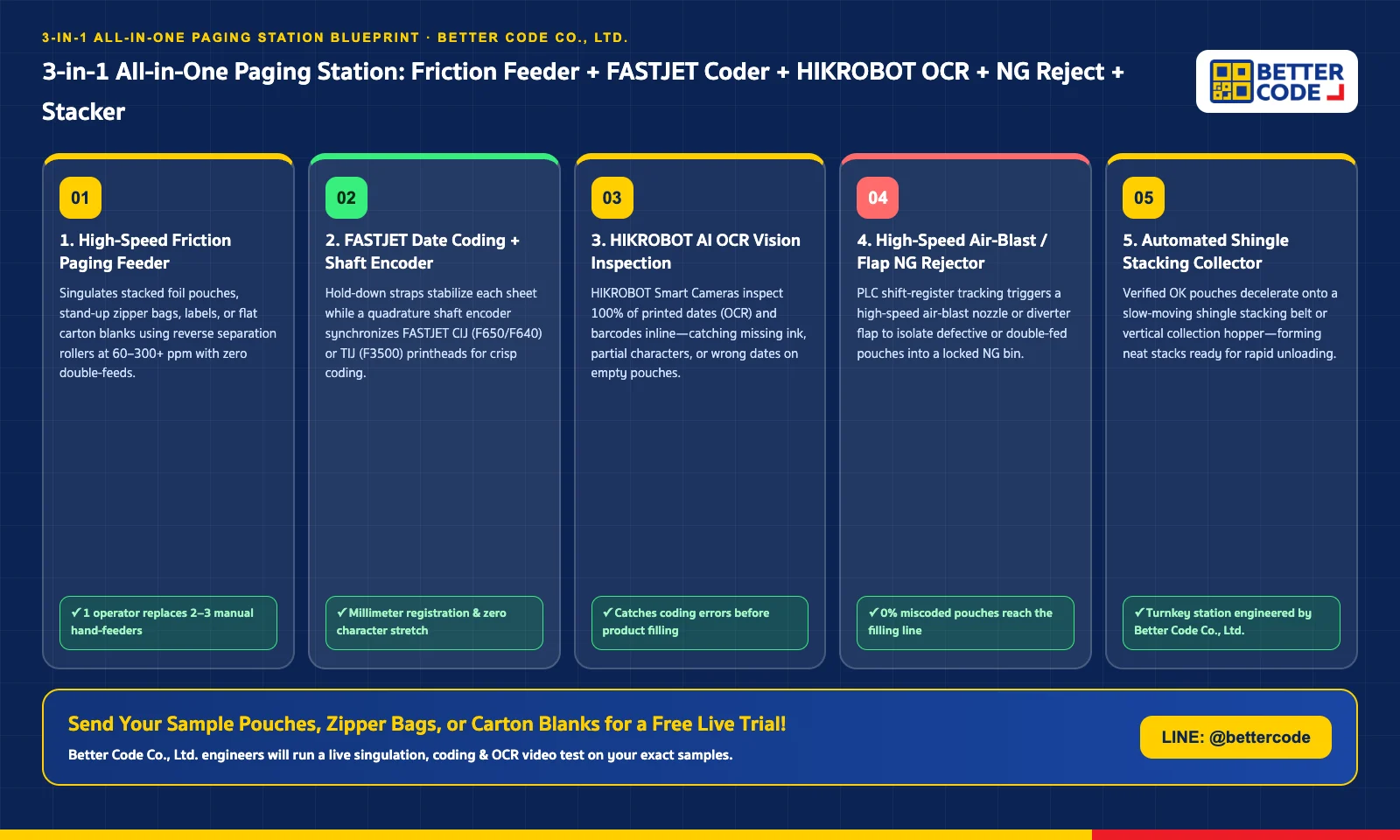
Reallocate 2–3 Manual Feeders to Higher-Value Work (150–300+ PPM Single-Operator Output)
Instead of paying 2–3 operators to fan and place pouches by hand for 8 hours a day, a single operator simply top-loads stacks of pouches or carton blanks into the hopper on the fly while the machine runs at 150–300+ pieces per minute. Freed personnel can be reassigned to higher-value tasks across your Factory Automation line.
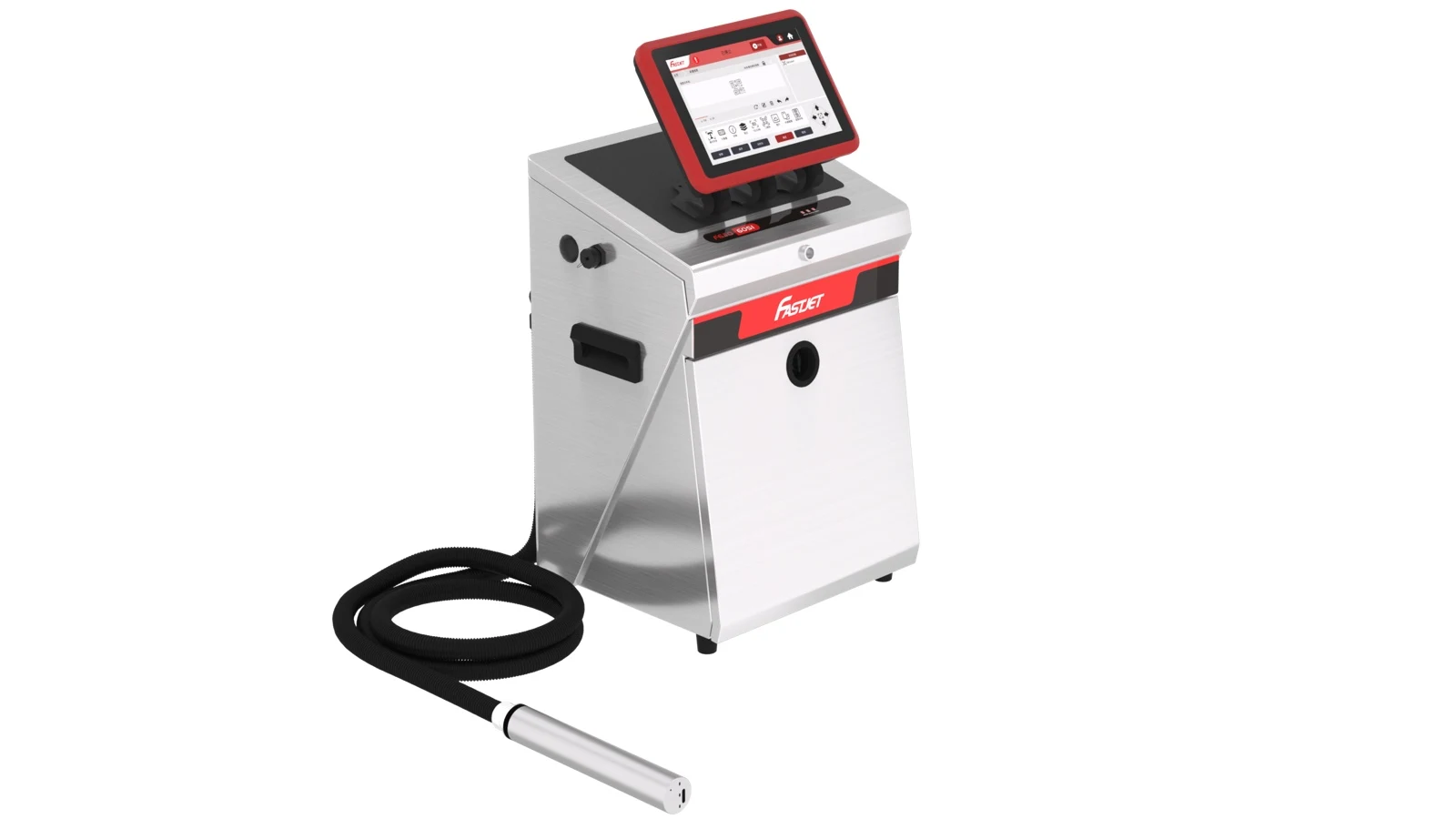
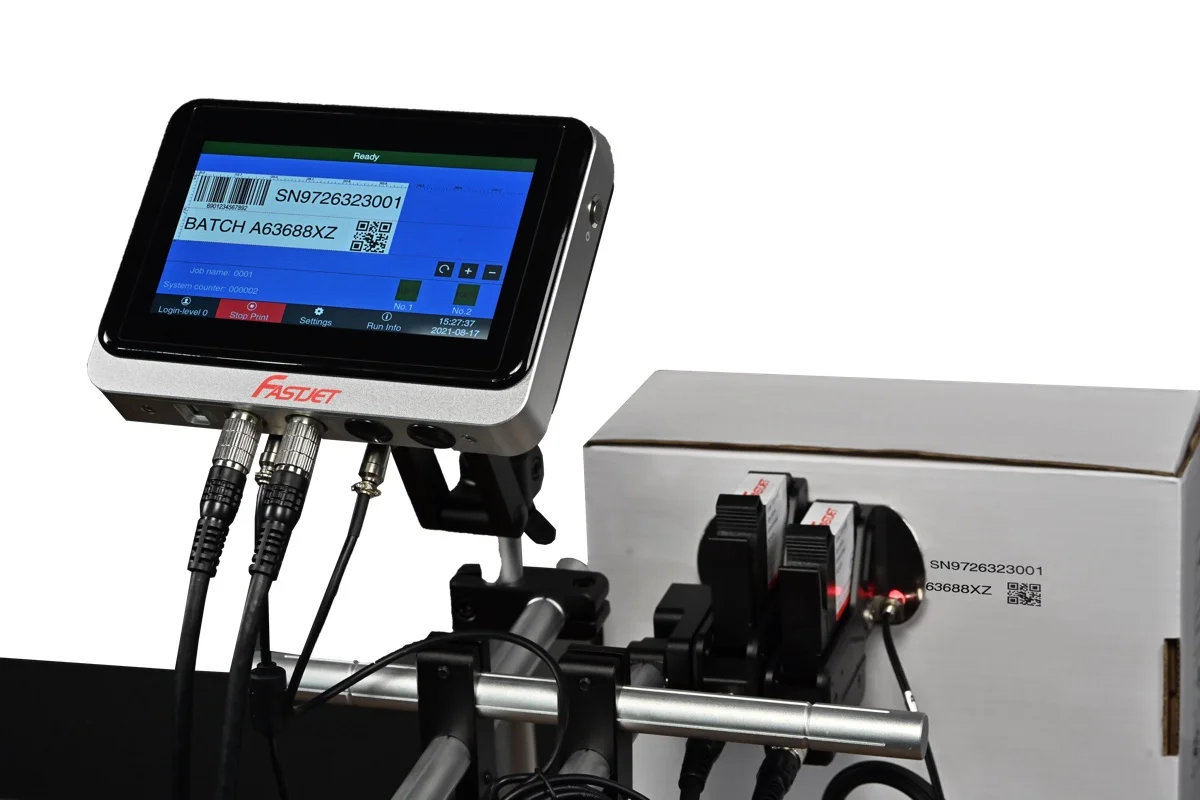
High-Contrast Coding on Any Substrate with FASTJET CIJ (F650/F640) or TIJ (F3500) + Shaft Encoder
Glossy laminated foil pouches and PE/PP polybags pair ideally with FASTJET F650 / F640 Continuous Inkjet (CIJ) printers using fast-drying MEK inks, while porous folding cartons, labels, and matte films achieve 600 DPI barcode clarity with the FASTJET F3500 Thermal Inkjet (TIJ) coder. A spring-loaded quadrature Shaft Encoder locks character width to real-time belt velocity.
100% Inline Date, Lot & Barcode Verification via HIKROBOT Deep-Learning OCR Camera
Milliseconds after printing, every pouch passes beneath a HIKROBOT OCR date code inspection camera. Deep-learning OCR verifies that every character of the MFG/EXP date and lot number is present, legible, and matches the active job recipe—catching clogged nozzles, low ink, or wrong operator date entries on the empty pouch before expensive product is ever filled inside.
High-Speed Air-Blast / Diverter Flap NG Rejector + Shingle Stacking Collector Outfeed
When the HIKROBOT camera flags a defective pouch (NG), our PLC shift-register sorting controller tracks encoder pulses and triggers a high-speed pneumatic air-blast nozzle or diverter flap to shoot only the defective sheet into a locked NG bin. Verified OK pouches glide onto a Shingle Stacking Conveyor or Collection Hopper in neat, overlapping stacks.
Engineering Note: To compare downstream conveyors for filled packages and shipping cases (Belt Conveyor vs Roller Conveyor vs Modular Belt), read our comprehensive guide: Industrial Conveyor Systems Guide: Belt vs Roller vs Food-Grade Conveyors.
5-Point Product Checklist for a Free Live Friction Feeding & Date Coding Trial at Better Code Co., Ltd.
Because laminated films, zipper tracks, paperboard coatings, and static charges vary widely across packaging suppliers, Better Code Co., Ltd. provides a free live feeding, FASTJET coding, and HIKROBOT OCR verification trial using your actual pouches or cartons. Share these 5 details with our engineers via LINE @bettercode or our Request a Quote page:
Specify the width and length of both the smallest and widest pouch, label, or carton blank you plan to run on the same feeder head (e.g., 300 mm, 400 mm, or custom wide-format throat).
Are you feeding aluminum foil laminates, glossy PE/PP polybags, matte kraft pouches, paper labels, or varnished folding carton blanks? Do sheets cling together from static charge?
Is the product a flat 3-side-seal sachet, or a stand-up zipper pouch with a thick top seal and folded bottom gusset that requires split differential feed rollers?
How many lines of MFG/EXP/Lot or 2D barcode text are required, where is the target print window located on the pouch, and do you require inline HIKROBOT OCR inspection + NG rejection?
What throughput (pieces per minute or packs per shift) do you need, and should the outfeed discharge into a vertical Drop Hopper, a Shingle Stacking Conveyor, or directly onto a main packaging line?
Frequently Asked Questions: Industrial Friction Feeders, Paging Machines & Coding Conveyors (FAQ)
What is an industrial Friction Feeder (Paging Machine) and how does it differ from a standard conveyor?
An industrial Friction Feeder (Paging Machine) combines a vertical stack hopper, high-grip urethane feed rollers, and a reverse-rotating separation roller/gate with a precision coding conveyor. Instead of an operator placing pouches by hand one by one, you load a stack of 200–500 flat pouches, labels, or carton blanks into the hopper and the feeder automatically singulates them into a evenly spaced single-file stream.
Can a friction feeder handle Stand-Up Pouches and Zipper Bags that have uneven thickness?
Yes, provided you specify a Heavy-Duty Differential / Multi-Roller Friction Feeder engineered for contoured pouches. By positioning adjustable feed wheels outside the thick zipper track, using dual micrometer gate gauges, and adding spring-loaded top hold-down skis, the feeder pulls uneven stand-up pouches straight without skewing or double-feeding.
How many pouches or cartons per minute can an automatic friction feeder process?
Real-world throughput depends on pouch length and coding content, typically ranging from 60 to 300+ pieces per minute (ppm) when paired with a FASTJET CIJ (F650/F640) or TIJ (F3500) printer—4 to 8 times faster than manual hand feeding. Dual independent VFD inverters let operators fine-tune both feed roller speed and conveyor belt velocity.
Why is consistent pitch spacing critical when integrating a HIKROBOT OCR camera and NG rejector?
Optical Character Recognition (OCR) vision cameras and downstream pneumatic rejectors rely on a clean leading-edge photo-eye trigger and encoder pulse tracking. If two pouches overlap with zero gap, the sensor treats them as a single item and the rejector cannot cleanly isolate a defective pouch. Setting the conveyor belt faster than the feed roller creates a crisp, repeatable pitch gap.
How are good (OK) pouches collected at the end of the coding conveyor without scattering?
Better Code Co., Ltd. integrates either an adjustable vertical Collection Drop Hopper or a slow-moving Shingle Stacking Conveyor at the outfeed. After defective (NG) pouches are diverted into a locked reject bin, verified OK pouches overlap neatly into shingled stacks so one operator can unload hundreds of coded pouches in seconds.
Can we send sample pouches or flat cartons to Better Code Co., Ltd. for a free live feeding and coding test?
Absolutely. Send 50–100 sample pouches, zipper bags, labels, or unfolded carton blanks to Better Code Co., Ltd. Our engineers will test high-speed singulation, FASTJET date coding, and HIKROBOT OCR verification on our demo station and send you a full video report and quotation at no cost.
Book a Free Sample Feeding & Coding Trial or Request a Custom Quotation from Better Code Co., Ltd.
Whether you need a standalone industrial friction feeder and SUS304 coding conveyor for your existing printer or a turnkey closed-loop station integrating FASTJET CIJ coders, TIJ printers, HIKROBOT OCR cameras, and PLC NG rejectors, Better Code Co., Ltd. is ready to test your sample pouches and engineer a tailored solution.
Request Friction Feeder Quote ↗Explore Conveyors & Paging Feeders ↗Explore FASTJET Date Coders ↗Send Pouch Photos on LINE @bettercode ↗Engineering References & Design Standards
- Industrial friction feeder and paging machine mechanical standards (Reverse Separation Roller kinematics, micrometer gate calibration, and SUS304 date-coding conveyors): Conveyor & Factory Automation Engineering Division, Better Code Co., Ltd.
- Closed-loop synchronization standards for quadrature shaft encoders, FASTJET industrial coders (CIJ F650/F640, TIJ F3500), HIKROBOT OCR vision systems, and PLC-controlled high-speed pneumatic rejectors.