
Date Coding for Cosmetics and Pharmaceuticals
Print lot numbers, expiry dates, barcodes and QR codes on bottles, tubes, containers, labels and cartons, with camera verification after printing.
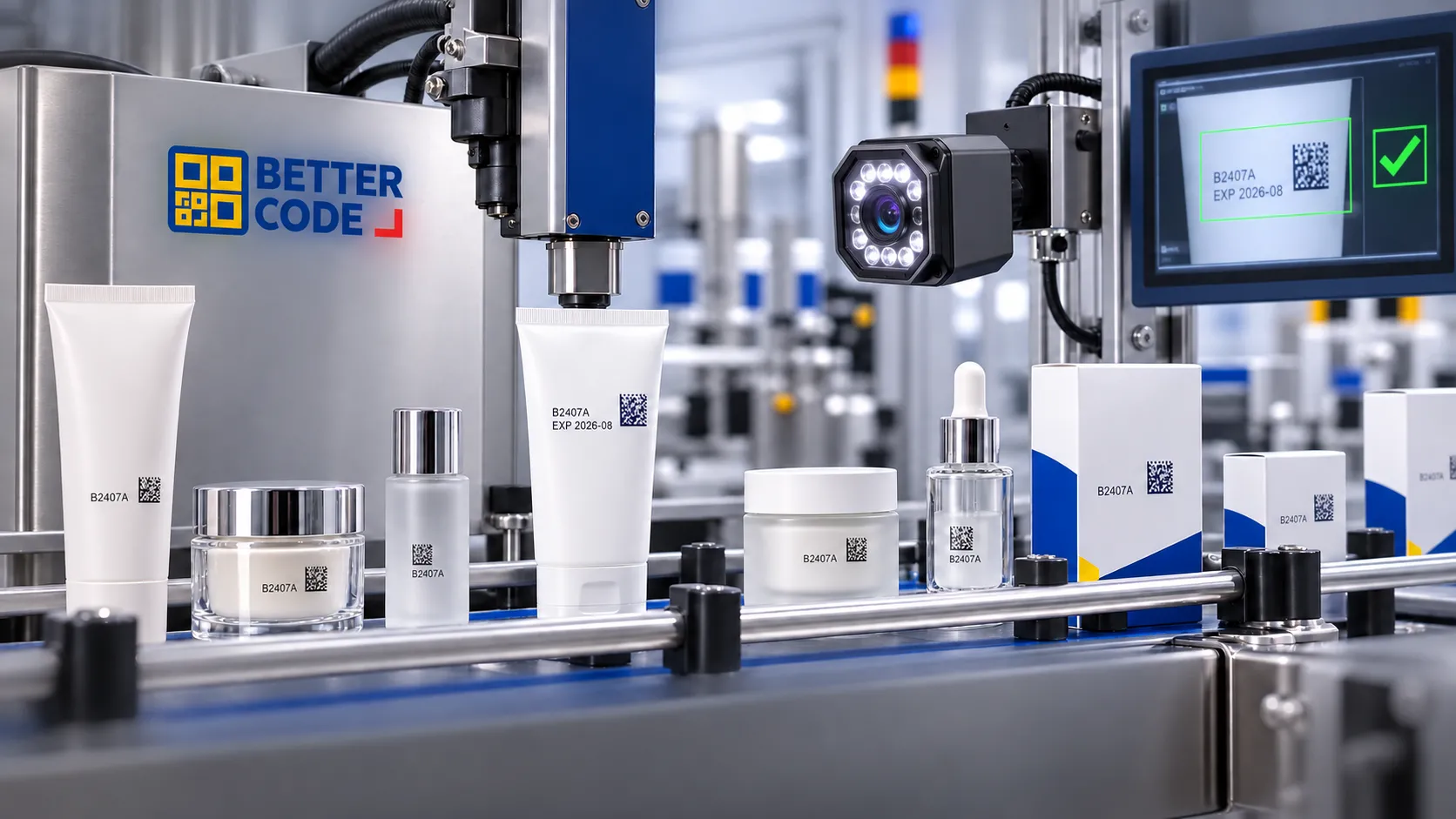
The short answer
Cosmetic and pharmaceutical packaging combines small print areas with varied shapes. Control position, clarity and readability by selecting CIJ, TIJ or UV laser based on actual materials.
What to consider
These details help match the printer, ink, printhead, laser and inspection equipment to your application.
Small print areas
Measure the available print area and position on bottles, tubes, containers or cartons before designing the message.
Clarity and readability
Test both visual legibility and actual scanning of small characters and 2D codes.
Traceability
Define lot numbers, dates and codes that connect to the factory’s inspection workflow or database.
Technologies to test
Coding and inspection for small packaging must be assessed against the material, mounting position and actual environment.
Cartons, labels and crisp characters
Match the ink to the material and control printhead distance
Test actual samples before choosingBottles and differently shaped packaging
Test print position, adhesion and speed
Test actual samples before choosingPlastics and polymers requiring permanent codes
Test marking and scanning on actual materials
Test actual samples before choosingInspect text, code presence and readability
Define pass/fail samples, lighting and camera angle
Test actual samples before choosingTest under realistic production conditions
Good samples cover the actual materials, colours, messages and speeds, revealing limitations before investment.
Frequently asked questions
Practical answers to help you prepare for a discussion with our engineers.
Can QR codes be printed on small packaging?
Yes, where sufficient space and suitable resolution are available. Test code size, clarity, reading distance and background colour with the actual scanner.
Which applications suit UV laser?
UV laser can suit many materials requiring fine marks and lower thermal impact than some other technologies. Actual materials must be tested before selection.
How can we verify that every product carries the correct code?
Use a vision camera or code reader to check code presence, position and data, then trigger an alarm or rejection according to the designed criteria.
Choosing a system with Better Code
Send your sample
Specify the material, message, position and line speed.
Test and compare
Assess clarity, adhesion, readability and limitations.
Installation and support
Select equipment, install, train operators and plan maintenance.
Let Better Code assess your samples
Send product photos, material details, print data and production speed so we can select and test the right technology.