
Feed consistently.
Convey with confidence.
Ready for coding.
Feeder · Roller · Belt Conveyor
Plan product handling around your products and the date coding equipment on your production line.
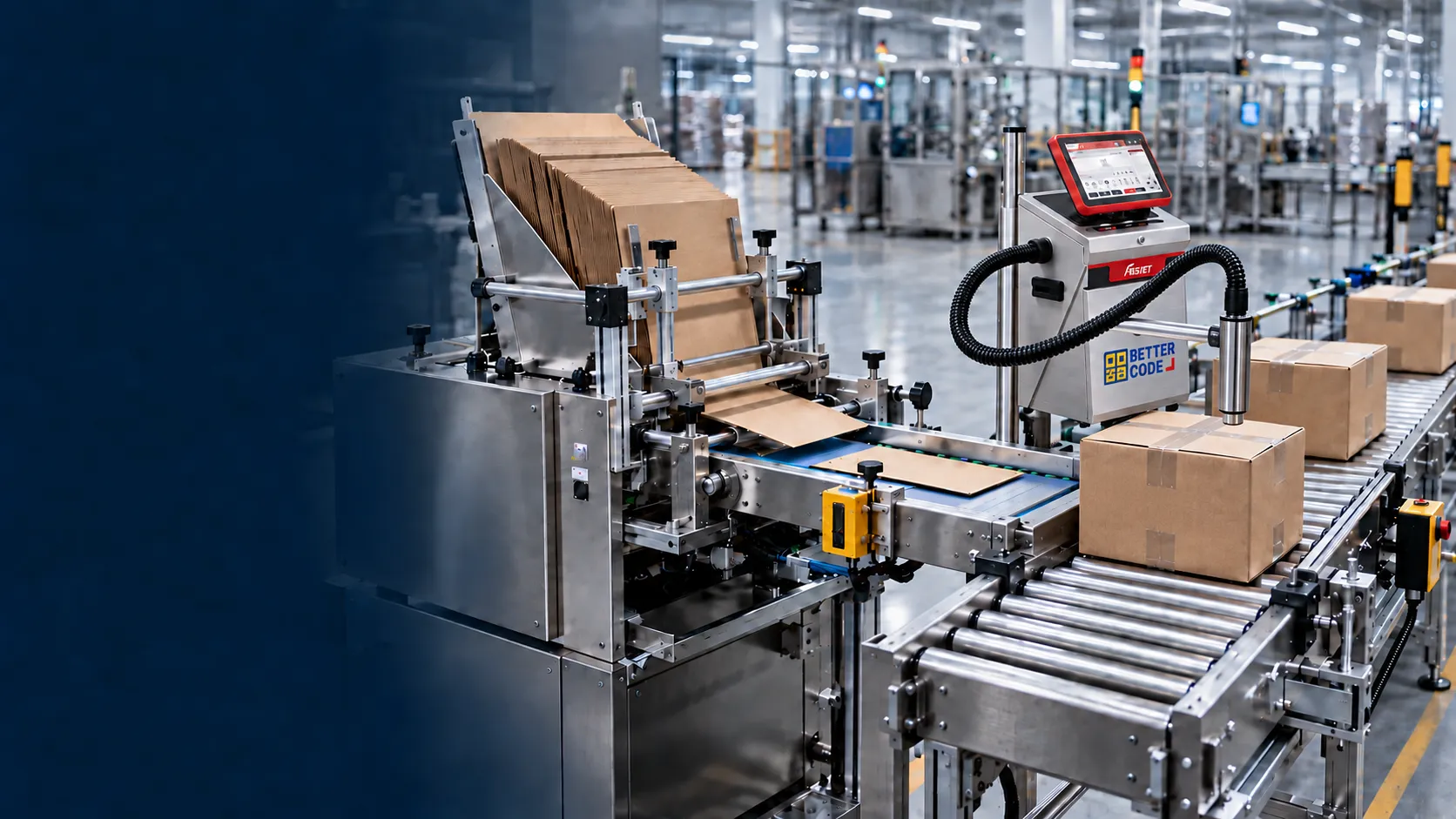
A feeder separates stacked flat products or cartons and feeds them individually. Roller conveyors suit cases and cartons with stable bases. Belt conveyors support products such as pouches, bottles and cartons. Assess dimensions, weight, speed and the actual print position together.
Handling systems matched to your products
We start with the actual product to help avoid slipping, tipping and inconsistent print positions.
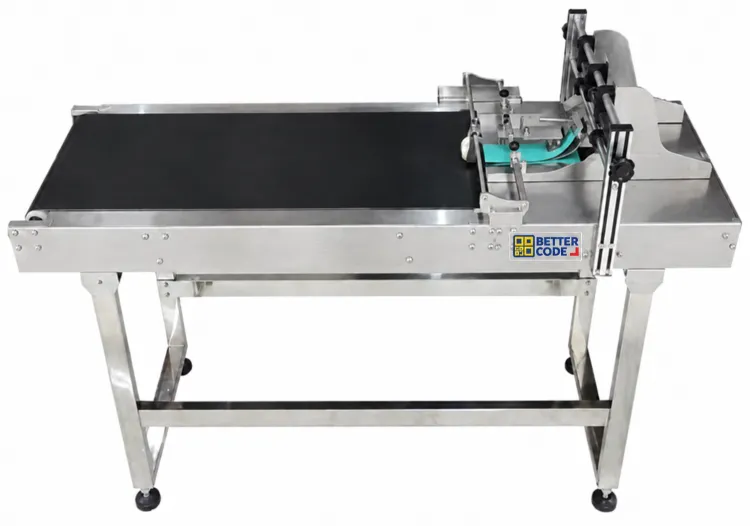
Automatic product feeders
Separate stacked products such as flat bags, pouches or folded cartons and feed them continuously through the coding position.
Test thickness, surface texture, sticking between products and spacing.
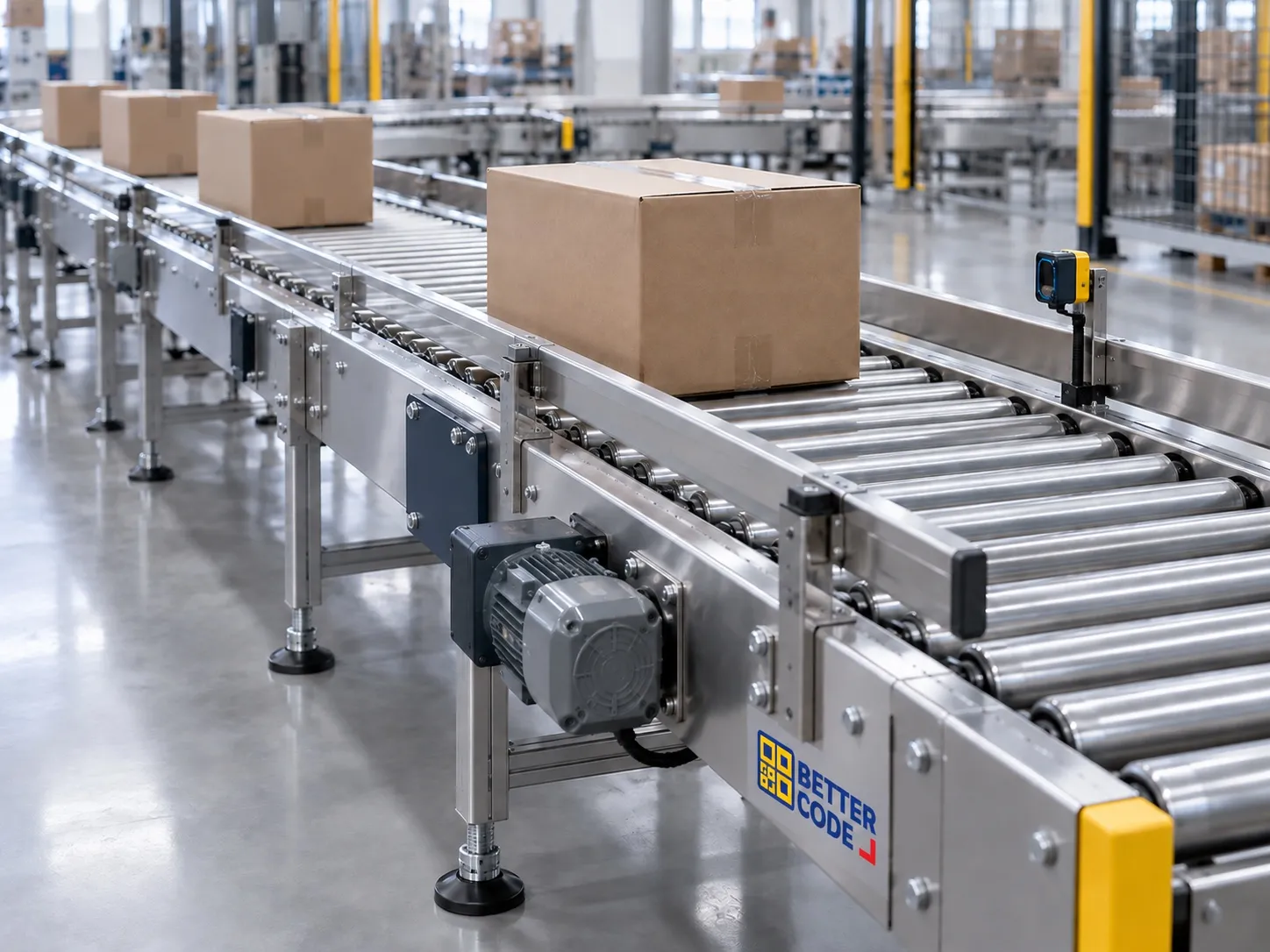
Roller conveyors for cartons
For stable, flat-bottomed products such as cases and cartons. Plan straight sections, transfers and layout around the available space.
Check carton bases, weight, roller spacing and transfers between sections.
Concept illustration; not an actual installation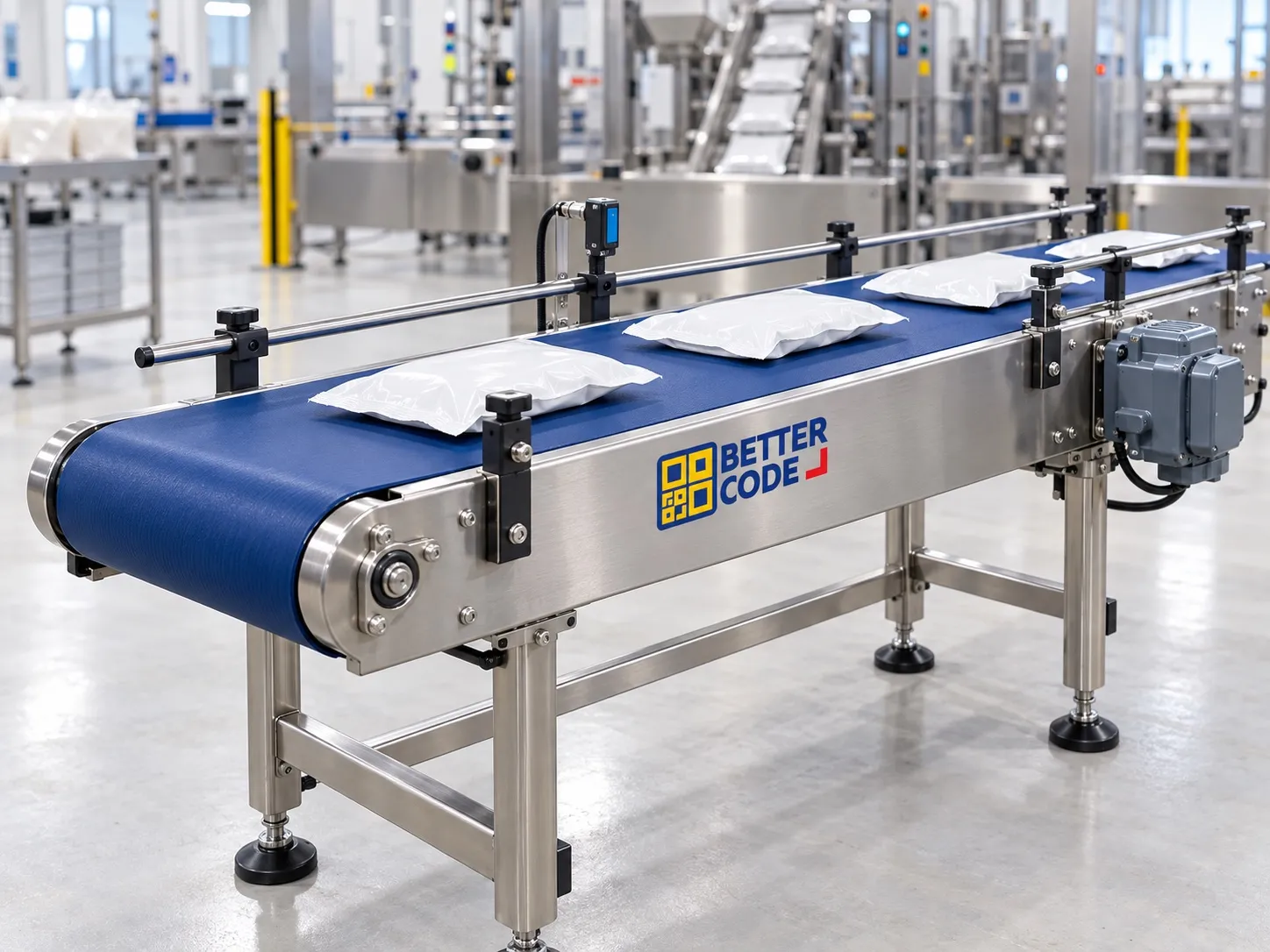
Belt conveyors
A continuous conveying surface carries different product sizes through sensing and coding positions. Suitable for pouches, cartons and bottles that can be consistently aligned.
Check belt material, grip, speed and printhead clearance.
Concept illustration; not an actual installationCompare before you choose
| System | Suitable products | What to verify |
|---|---|---|
| Feeder | Stacked pouches, flat bags and folded cartons | Reliable separation without sticking or jams |
| Roller Conveyor | Cases and flat-bottomed cartons | Stable support across the roller spacing |
| Belt Conveyor | Pouches, bottles, cartons and products needing a continuous support surface | Stable movement without slipping or tipping at the print position |
Application concepts by industry
Assess the material, product alignment and print position against each production line’s requirements.
Food
Print manufacturing dates, expiry dates and lot numbers on packaging. Choose a readable location and test ink adhesion on the actual substrate.
Bottled water and beverages
Consider bottle alignment, product spacing and the coding location on the bottle or label for consistently readable codes.
Cosmetics
Test actual cartons and packaging, considering coatings, message size and a clearly visible print location.
Information that helps us design your system
Product samples
Photos, dimensions, weight and packaging material
Production capacity
Products per hour and required line speed
Coding requirements
Print content, location and a sample of the desired result
Installation space
Site photos and dimensions, including existing line connections
Frequently asked questions
How is a feeder different from a belt conveyor?
A feeder separates stacked products into individual items. A belt conveyor transports products along the line. They can work together when the process requires both functions.
Can all cartons run on roller conveyors?
Not necessarily. Check the carton base dimensions and strength, product weight and roller spacing, especially for small cartons or uneven bases.
Can the system work with a FASTJET F650?
An integrated mounting arrangement can be designed. Actual products, line speed, installation space and required code quality must be assessed and tested before confirming the system.
What should I send for a quotation?
Send product photos, dimensions and weight, hourly output, print content and location, plus site photos or video. These help us assess the appropriate system and price.
Build the right handling system with Better Code
Send a product sample or a short site video for assessment before deciding.