BETTER CODE · OFFICIAL HIKROBOT DISTRIBUTOR IN THAILAND
Hikrobot machine vision for factories
Inspect defects, read codes and connect reject systems
Assess Hikrobot cameras for component inspection, defect detection, OCR/OCV date and lot checks, and barcode or QR reading. Better Code, the official HIKROBOT distributor in Thailand, evaluates cameras, lighting, lenses, software and PLC integration using your actual samples.
Send product photos for assessmentRequest a vision-system quotationCall +66 2 170 9611
OFFICIAL HIKROBOT DISTRIBUTOR · THAILAND
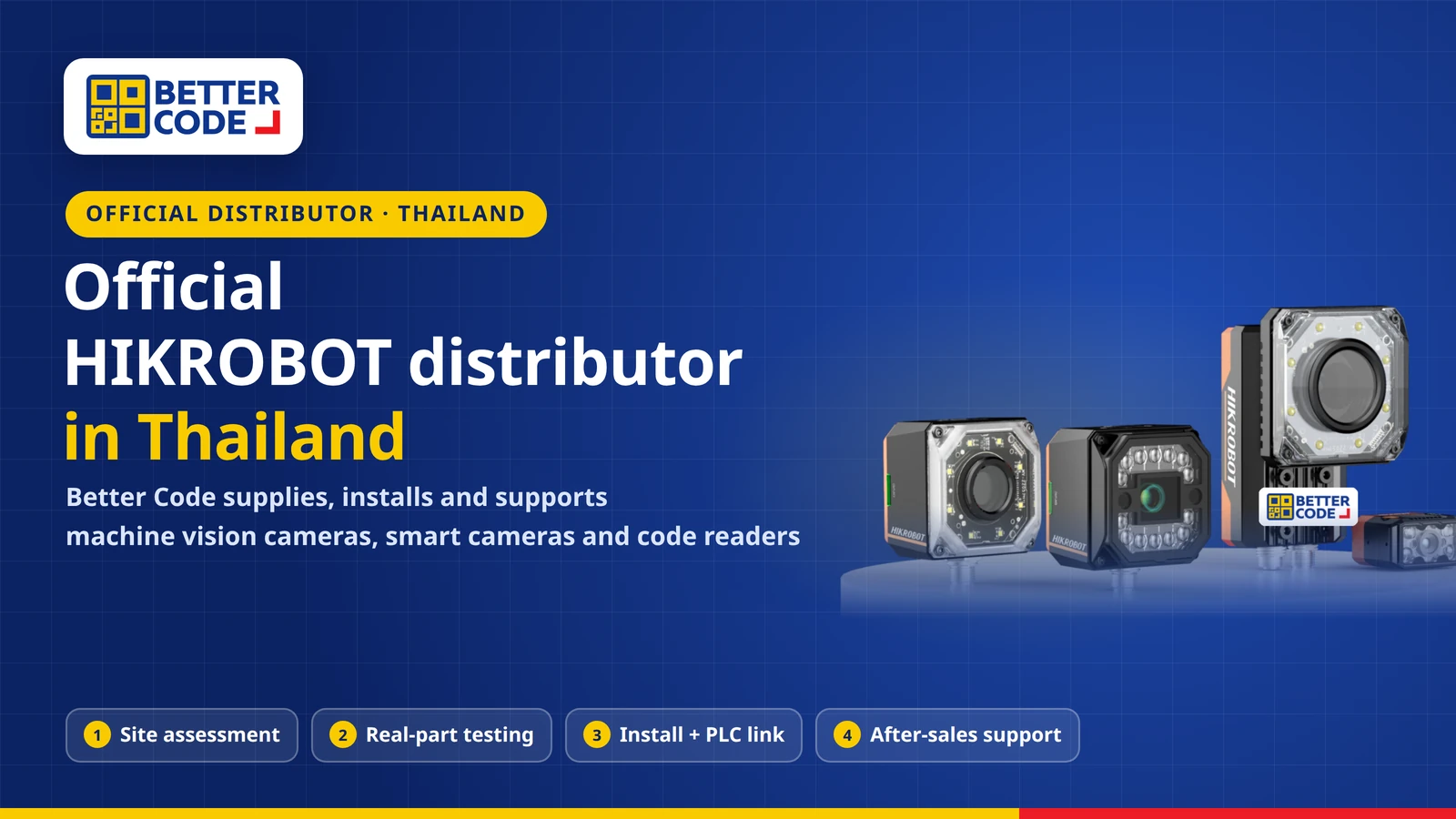
Better Code is the official HIKROBOT distributor in Thailand
Better Code Co., Ltd. is the official HIKROBOT distributor in Thailand. We supply, install and support HIKROBOT machine vision cameras, smart cameras, vision sensors and code readers for food, pharmaceutical, packaging, automotive-parts and electronics factories.
- Local team in ThailandOffice in Lat Krabang, Bangkok
- Real-part testingBefore model selection and quotation
- After-sales supportInstallation, training and ongoing service
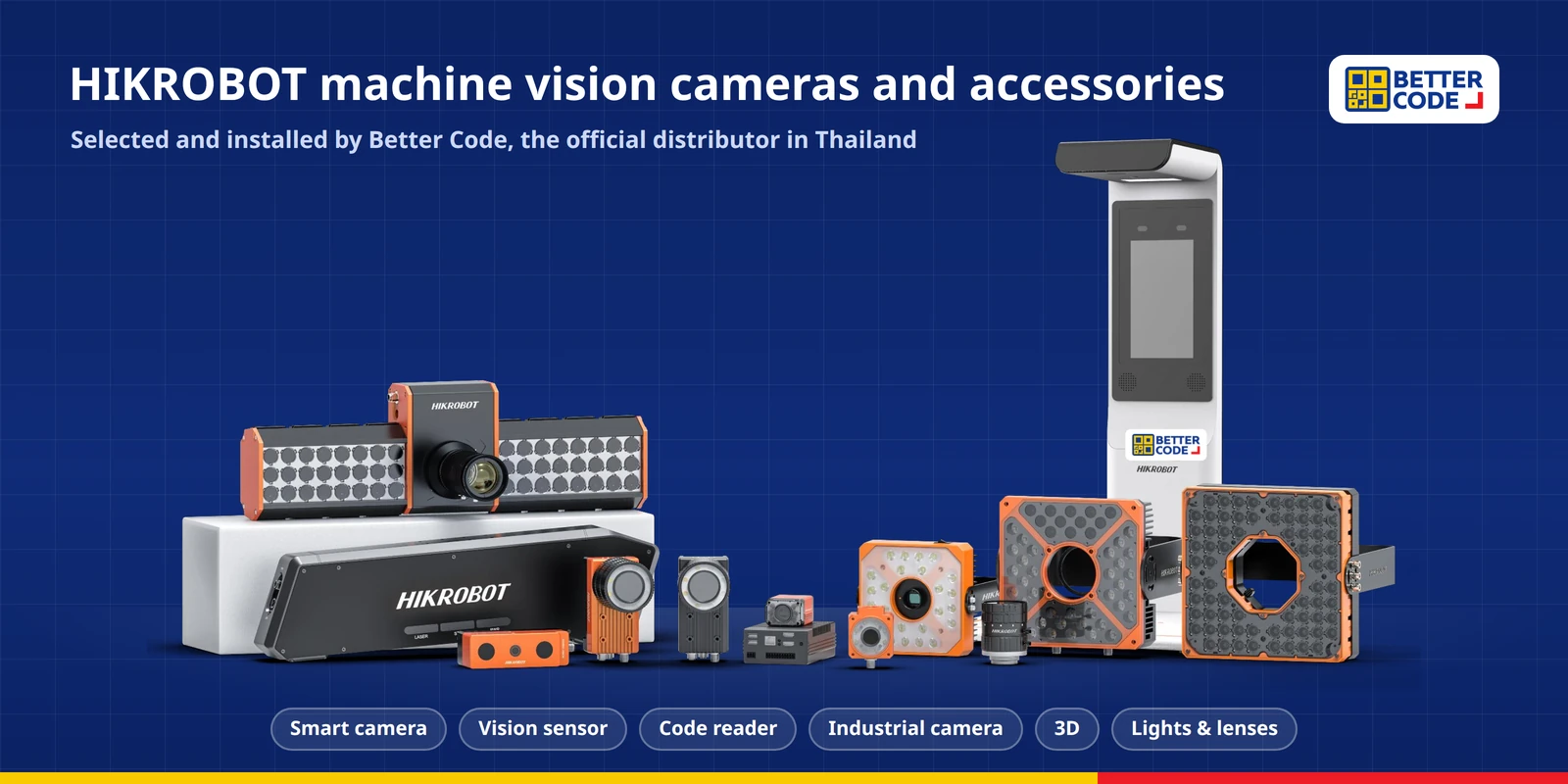
HIKROBOT products supplied and installed by Better Code
Choose the camera type that fits your inspection task, line speed and lighting conditions
Smart camera
All-in-one camera with on-board processing for presence, position, defect and OCR checks, depending on the tools each model supports
Several checks, one cameraVision sensor
Easy-to-set-up image sensor for clear-cut checks such as part presence, caps, labels or wrong colours
Simple and cost-effectiveIndustrial camera + software
PC-based vision for multi-camera tasks, dimension measurement and deep learning where parts vary a lot
Complex, flexible tasksCode reader
Reads barcodes, QR codes and Data Matrix on the line, including direct part marks (DPM) on supported models
Full traceabilityComplete service from testing to production
- Assess the taskSend part photos, the problem and line speed
- Test real partsConfirm the camera can see and inspect
- Select equipmentCamera, lens, lighting and software
- Install and connectPLC, reject signal or sorting system
- Train and supportOperator training and after-sales service
Want to buy HIKROBOT cameras or need help choosing a model?
What is a vision inspection system (inspection camera)?
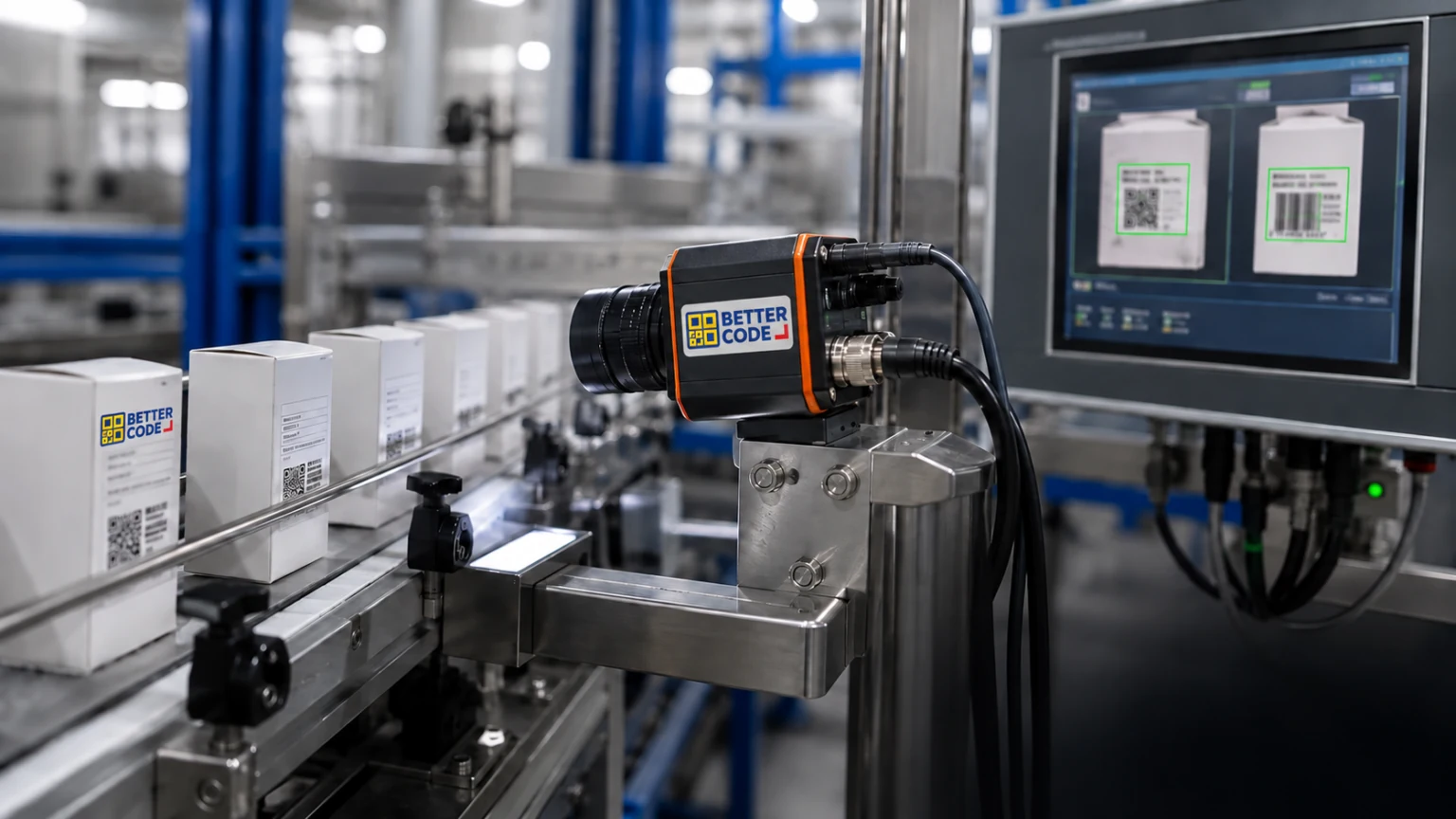
A vision inspection system, also called an inspection camera or machine vision inspection, is an automated quality inspection system for factories. It uses industrial cameras, lenses, lighting and image-analysis software to image products on a production line and automatically decide pass/fail (OK/NG), so wrong or defective parts can be detected and rejected from the line.
Better Code supplies and installs Hikrobot inspection cameras. We assess actual product images, select suitable cameras, lenses and lighting, and plan integration with existing conveyors and PLCs. If comparing brands, send products or photos for application testing before deciding.
Main functions of a vision inspection camera
- Defect and surface inspection: find scratches, dark spots, dents or damaged parts — how defect detection cameras work
- Dimension and position checks: measure width, length and spacing, and verify part position or orientation — dimension measurement cameras
- Assembly verification: confirm that parts, caps, screws or labels are present, correctly placed and not reversed
- Text and date code reading: check lot numbers and manufacturing/expiry dates (MFG/EXP) with OCR/OCV to confirm they are complete, legible and correct, then automatically reject defective (NG) products from the production line; also read barcodes, QR codes and Data Matrix codes — date code inspection cameras (OCR)
- OK/NG output and rejection: send signals to a PLC or reject unit to remove failed products from the conveyor — vision OK/NG sorting and PLC signals
Types of vision inspection cameras
- Smart camera: processes images on board without a separate PC; checks presence, position, defects and OCR at multiple points in one camera, depending on the tools each model supports
- Vision sensor: easy-to-configure image sensor for clear-cut checks such as part present/absent, caps, labels or wrong colour
- Code reader: reads barcodes, QR codes and Data Matrix codes on production lines, including direct part marks (DPM) on supported models
- Industrial camera + PC software (PC-based machine vision): for multi-camera systems, dimension measurement and AI deep learning where products vary widely — AI vision inspection with deep learning
Compare each type in more detail: Types of Machine Vision Cameras
What can a vision system inspect?
Machine vision combines industrial cameras, lighting, lenses and image-processing software to inspect products against defined conditions—for example, whether a cap is present, text matches the production job or a product code is readable. Results are sent to an operator or control system for further action.
Factories and SMEs can start with a specific inspection problem. Test actual products at operating speed, including pass and fail samples, before confirming the equipment and scope.
START WITH YOUR APPLICATION
What would you like to inspect?
01 / PRESENCE
Components and assembly
Examples include caps, screws, missing parts and incorrect orientation after assembly. Define the inspection position and acceptable conditions clearly.
02 / OCR
Manufacturing dates and lot numbers
Read inkjet or laser text and compare it with approved production data. Select suitable OCR tools and test faint, smudged or skewed prints and reflective surfaces.
03 / CODE READING
Barcode and QR code reading
Industrial code readers read supported barcodes, QR codes or Data Matrix codes to identify products and lots. Model verification also requires comparing the decoded result with reference data.
04 / POSITION
Position and orientation
Assess label placement, component position and orientation before packing. Define acceptable tolerances and test products in motion or rotation.
05 / COUNT & MEASURE
Counting, dimensions and colour
Match the camera and tools to the task. Measurement requires appropriate lenses, resolution and calibration. Colour inspection needs colour-capable equipment and controlled lighting.
06 / REJECT & RECORD
Inspection results and rejection
Connect pass/fail results to a PLC for alerts or an appropriately designed reject mechanism. Include reject confirmation and any required result or image logging within the project scope.
These are applications to assess, not features available on every camera. Results depend on the equipment, lighting, product and actual operating conditions.
From one image to an integrated production process
Better Code helps integrate vision with automation, date coding and software. Protocols, existing equipment and responses to unreadable codes or communication faults are checked before operation.
View results through production dashboards
Pass/fail counts, inspection history and required images can be displayed through software within the agreed scope. OEE additionally needs operating-time, production-rate and quality data; camera images alone cannot calculate OEE for an entire line.
Not sure which camera you need? Start with these four points.
- Show the inspection problem Pass, fail and borderline product photos or samples
- Describe the mounting location Conveyor photos or video, lighting, distances and product orientation
- Specify throughput Products per minute, conveyor speed and product spacing
- Define the required response Alerts, rejection, image storage or data output to a PLC / dashboard
Our team assesses the approach, tests samples and agrees acceptance criteria—including false accepts and false rejects—before confirming the system and price.
INDUSTRIES
Industry applications
Use inspection cameras alongside printers to verify dates, lot numbers and codes before products leave the line.
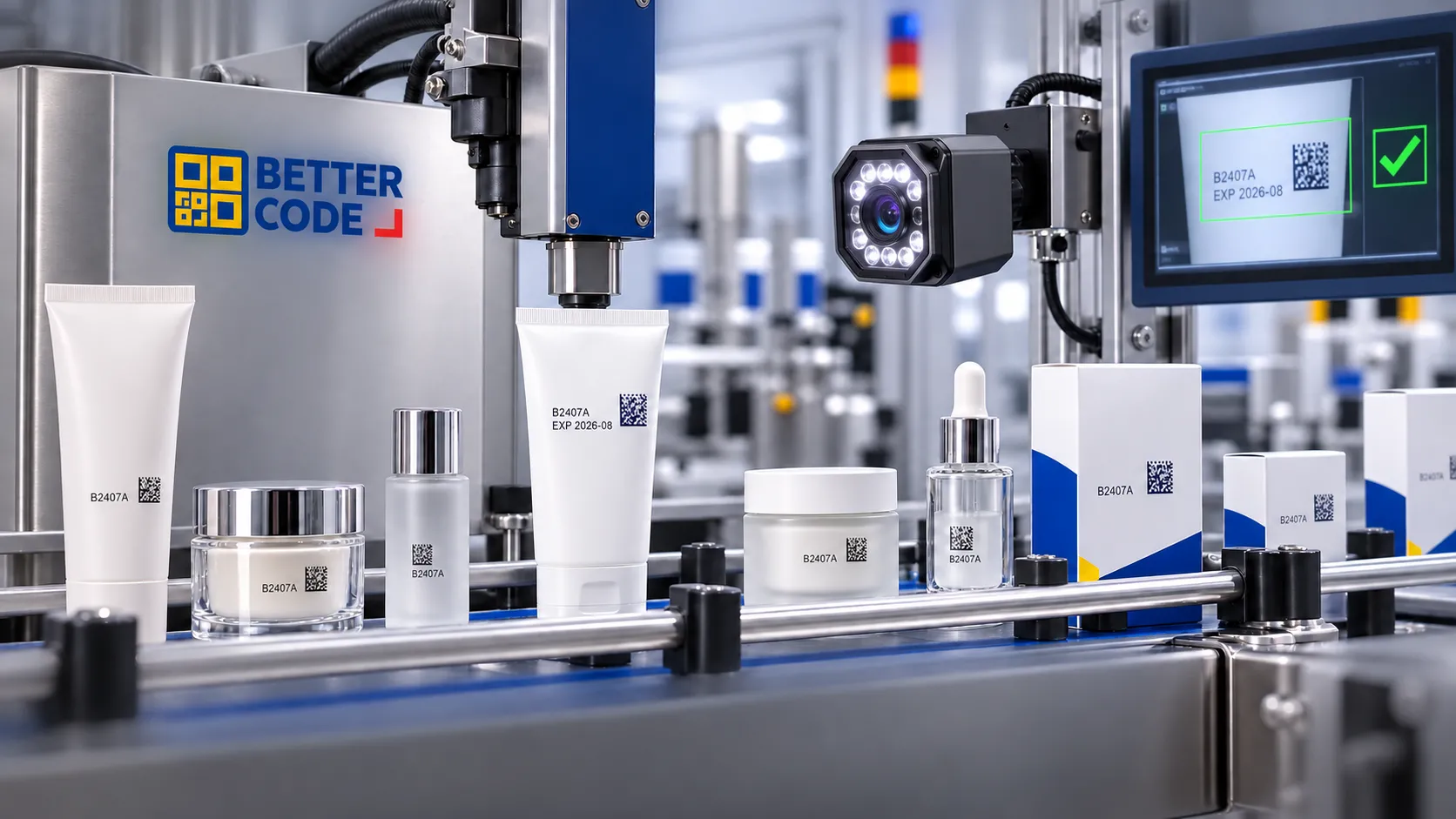 Cosmetics and pharmaceuticals →
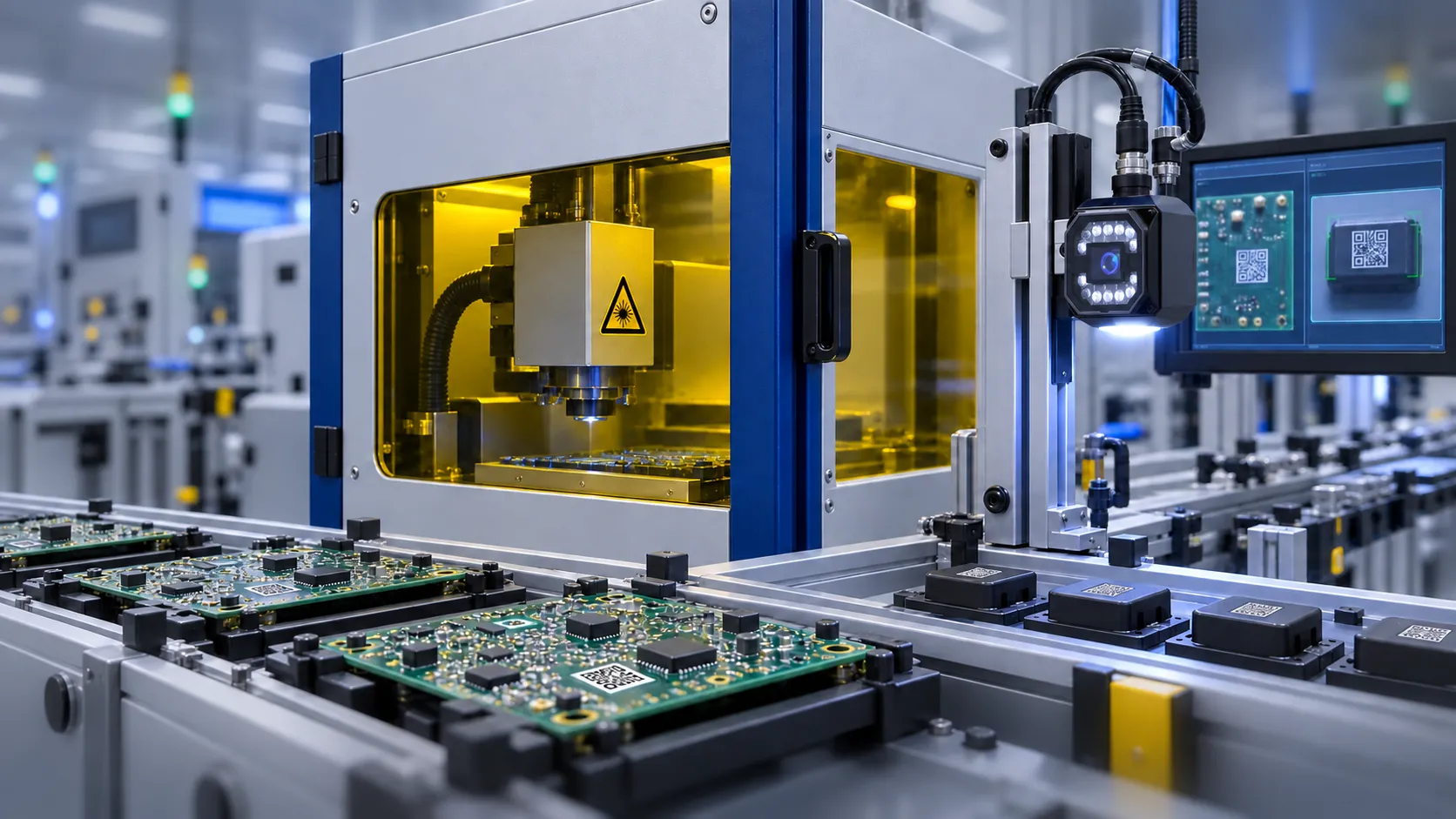 Electronics →
Machine vision FAQs
Where can I buy HIKROBOT cameras in Thailand?
Contact Better Code (Better Code Co., Ltd.), the official HIKROBOT distributor in Thailand, via LINE @bettercode or +66 2 170 9611. The team helps choose a model from your part photos and real requirements, and provides quotation, installation and after-sales support.
Who installs machine vision inspection systems in Thailand?
Better Code covers the full process: site assessment, real-part testing, camera, lens and lighting selection, installation and PLC or reject-system integration, plus operator training and after-sales support.
What types of vision inspection cameras are there?
There are five main types: vision sensors for clear-cut checks, smart cameras with on-board processing, code readers for reading codes, industrial cameras with PC software for multi-camera or deep learning tasks, and 3D cameras for height and shape. The right choice depends on the task, line speed and lighting on site. See the full comparison in Types of Machine Vision Cameras.
How does a defect detection camera find scratches and surface defects?
The camera images every part under lighting that makes defects visible, then uses vision tools or deep learning to find scratches, cracks, dark spots, dents, broken edges and stains, decides OK / NG and signals the PLC to reject defective parts. See details and real case figures in defect detection cameras.
How accurate is a dimension measurement camera?
It depends on field of view, camera resolution, lens, lighting and calibration. In HIKROBOT cases, gearbox parts (ID/OD, height, width) were measured with 60 micron accuracy over 360°, and gear shifter angles at ±2°. See how to calculate accuracy and choose lenses in dimension measurement cameras.
Can cameras inspect bottles, cans and beverage packaging?
Yes. Packaging inspection cameras check caps, fill level, labels, dates and lot codes, can codes and pack counts on every item on the line, then send OK / NG to the PLC for rejection. See checkpoints, lighting and real cases in packaging inspection cameras for bottles, cans and beverages.
Can a camera send OK/NG to a PLC for sorting?
Yes. The camera inspects each part and sends OK/NG to the PLC over digital I/O or a network such as Modbus, PROFINET or EtherNet/IP, which fires a pusher or air jet to remove failed parts. See signalling, reject timing and assembly checks in vision OK/NG sorting and PLC signals.
Can AI or deep learning cameras inspect parts?
Yes. AI cameras use deep learning to learn from example images and suit parts or defects whose appearance varies. They detect and count objects, classify, read characters and find defects, while clear-cut jobs can stay with rule-based vision. See how to choose and prepare images in AI vision inspection with deep learning.
What can automotive parts inspection cameras do?
They check assembly and position, measure dimensions and angles, find surface defects, read characters, read DPM codes for traceability and sort part models such as gears, pistons, hubs and tyres. See metal, oil and 360° challenges and real cases in automotive parts vision inspection.
How does a vision camera differ from a code reader?
A code reader focuses on decoding codes. A vision camera inspects images using its supported tools, such as presence, position or OCR. Not every barcode reader supports OCR, so selection should start with the application.
Does every application need AI?
No. Clearly defined inspection tasks may use conventional image-processing tools. More complex variation may justify assessing AI tools, with representative data and testing on compatible equipment.
Can inspection be guaranteed 100% accurate?
Accuracy cannot be guaranteed from specifications alone. Test samples covering real operating conditions and define responses to unreadable results, product movement and system faults.
Can it integrate with an existing line?
Mounting space, sensor signals, PLCs, protocols and reject timing must be assessed, followed by testing with the actual machinery and software.
How much does a vision system cost?
Cost depends on inspection points, cameras, lighting, lenses, software, mounts and rejection equipment. Send product photos and production speed so the quotation covers the required equipment and installation.
Which camera brand does Better Code supply?
Better Code supplies Hikrobot cameras and selects models, lenses and lighting for each inspection task, such as defects, code reading or assembly checks. Send photos or samples for assessment.
Read: machine vision inspection and industrial barcode reading
Let Better Code assess your inspection point
Send product photos, examples of the problem and line speed. Better Code Co., Ltd. will assess the vision system and integration appropriate for your site.
Discuss machine vision on LINE @bettercodeRequest a vision-system quotation