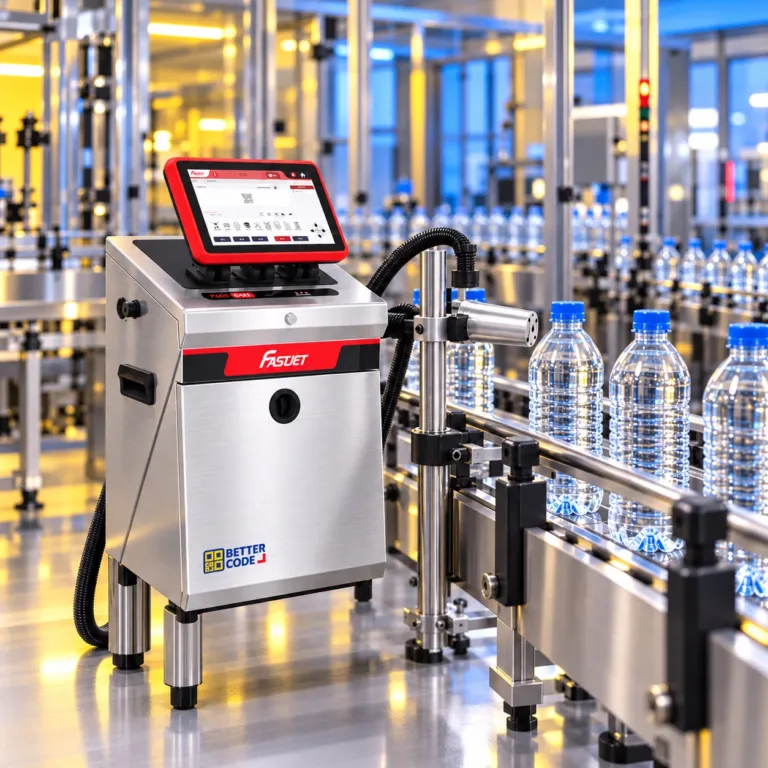
Industrial Date Coder Ink Selection & Adhesion Guide: Retort Pouches, Wet Bottles, Frozen PE/PP Film & Metal Cans
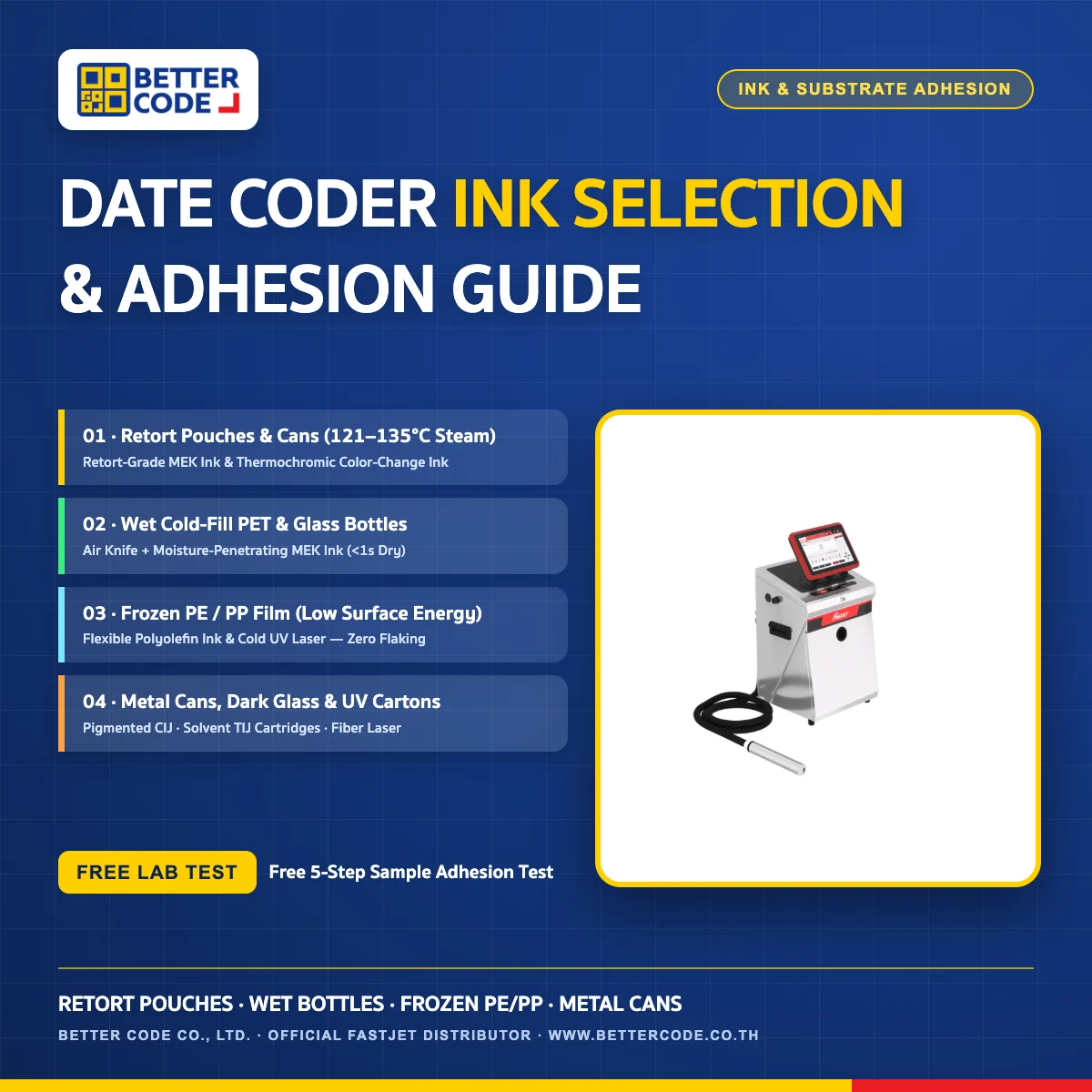
Why Does Date Coder Ink Peel or Smear on Retort Pouches, Wet Bottles & Frozen Film—and How Do You Guarantee 100% Adhesion?
Date coder ink peels or smears on retort pouches, wet bottles, and frozen films due to surface moisture barriers, low surface energy (PE/PP < 32 dynes/cm), and 121–135°C thermal shock. Achieve 100% adhesion by pairing CIJ printers with substrate-matched MEK/pigmented inks and air knives, TIJ solvent cartridges, or permanent Laser marking.
8-Substrate Ink & Date Coding Technology Matrix
Selecting an industrial date coder that prints smudge-free manufacturing (MFG) and expiration (EXP) dates requires matching date coder ink chemistry (solvent flash rate and resin binder) with the substrate’s surface energy and post-print processing:
| Packaging Substrate (8 Core Types) | Why Generic Inks Fail or Smear | Recommended Ink Chemistry & Coding System | Recommended FASTJET Models |
|---|---|---|---|
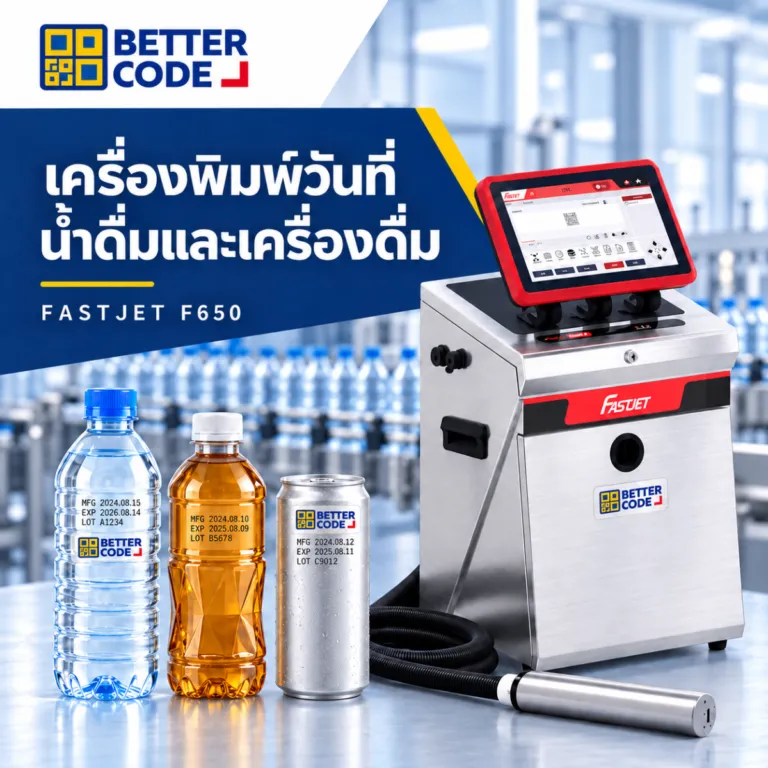
| 1. Retort Pouches & Autoclaved Food Packaging | 121–135°C pressurized steam for 30–90 mins softens standard resins, causing ink transfer, smearing, or fading | Retort-Grade MEK CIJ Ink, Thermochromic Color-Change Ink (sterilization indicator), or UV Laser | FASTJET F650 / F640 (CIJ) or FASTJET F7100U (UV Laser) |
| 2. Condensation-Wet PET & Glass Beverage Bottles (Cold-Fill) | Standing water droplets create a physical barrier between ink drops and the bottle wall, causing immediate running | Localized Air Knife + Moisture-Penetrating MEK CIJ Ink (0.5–1 sec flash dry) or CO₂ Laser | FASTJET F650 / F640 (CIJ) or FASTJET F7100C (CO₂ Laser) |
| 3. Frozen PE / HDPE / LDPE / PP Bags (Low Surface Energy) | Untreated polyolefins (< 32 dynes/cm) lack polar bonding sites and shrink at -18°C to -40°C, causing brittle inks to flake off | Flexible Polyolefin-Adhesion MEK CIJ Ink or 355 nm Cold UV Laser Marking | FASTJET F650 / F640 (CIJ) or FASTJET F7100U (UV Laser) |
| 4. Aluminum Cans, Tinplate Cans & Lacquered Metal Lids | Non-porous metallic coatings often carry trace seaming oil and undergo pasteurization or retort heating | Metal-Adhesion / Oil-Tolerant MEK CIJ Ink or permanent Fiber Laser etching (0 THB ink) | FASTJET F650 (CIJ) or FASTJET F7100F (Fiber Laser) |
| 5. Dark Amber Glass, Black Plastic Pipes, Cables & Extrusions | Black dye inks have zero contrast on dark substrates; industrial extrusions require UV and rub resistance | Opaque Yellow or White Pigmented CIJ Ink or high-contrast Fiber / UV Laser marking | FASTJET Pigmented CIJ or FASTJET F7100F / F7100U |
| 6. Aluminum Foil Pouches, Laminates (PET/AL/PE) & Coffee Bags | Smooth non-porous barrier films running on VFFS/HFFS wrappers smudge if solvent flash-off exceeds 1–2 seconds | Fast-Dry MEK CIJ Ink (< 1 sec dry) or Solvent TIJ Cartridge (on flat web before forming) | FASTJET F640 / F650 (CIJ) or FASTJET F3511 (TIJ) |
| 7. UV-Varnished Cartons, Pharma Boxes & BOPP Labels | Glossy UV coatings seal paper fibers, preventing water-based inks from absorbing | 300–600 dpi Solvent TIJ Cartridge (ideal for GS1 2D/QR codes) or CO₂ Laser ablation | FASTJET F3511 / F3541 / S510 (TIJ) or FASTJET F7100C |
| 8. Uncoated Paperboard, Corrugated Cases & Kraft Bags | Porous fibers absorb ink easily but generate paper dust along the conveyor | Aqueous / Pigment TIJ Cartridge (zero make-up evaporation) or standard CIJ | FASTJET F3511 / F3541 / Handheld S510 |
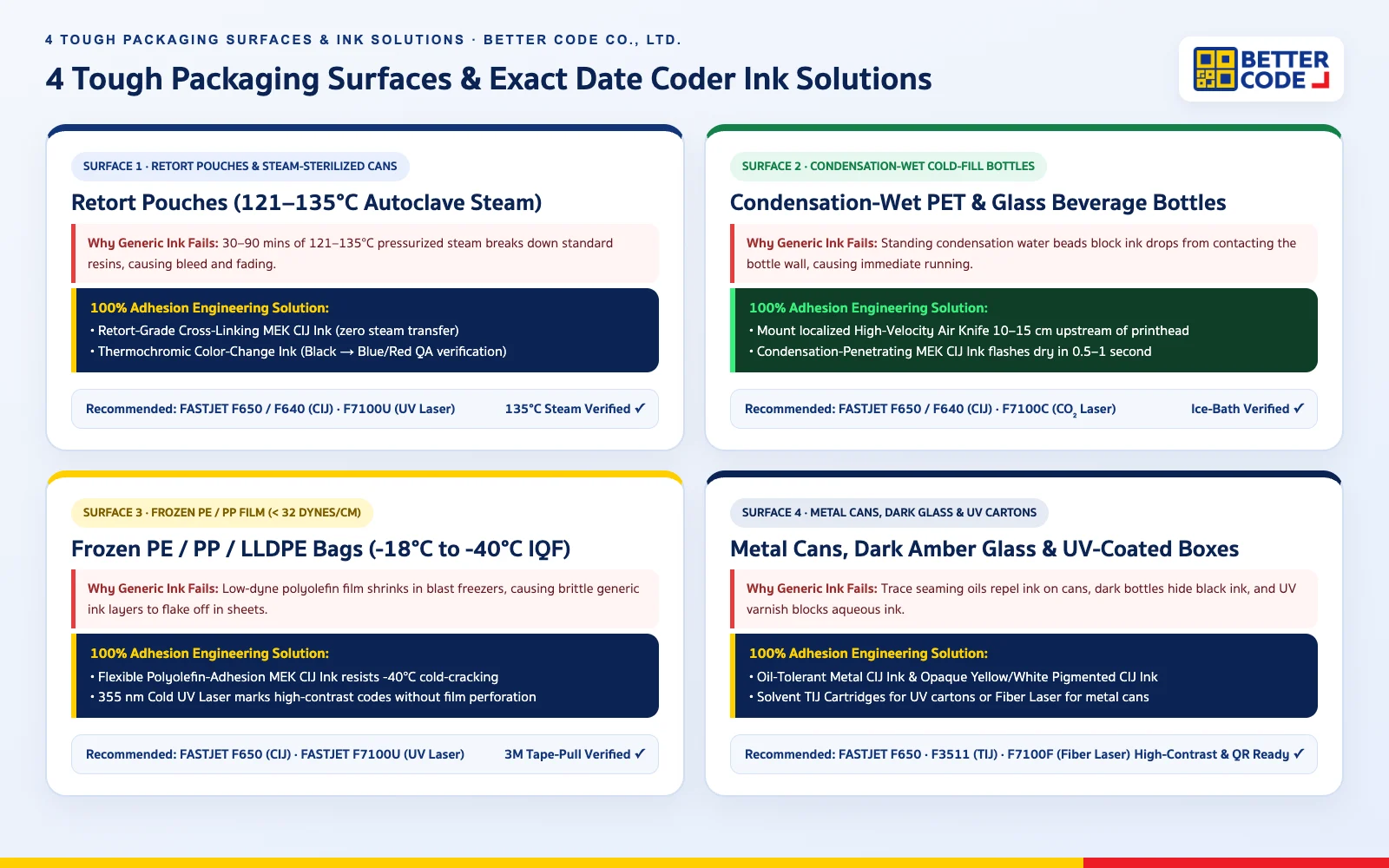
Deep Dive: Solving the 4 Toughest Ink Adhesion Challenges in Food & Beverage Plants
Across hundreds of food, beverage, and industrial lines supported by Better Code Co., Ltd., code rejection by modern trade retailers or GMP/HACCP auditors almost always stems from four extreme shop-floor environments. Here is the engineering root cause and permanent fix for each:
Retort Pouches & Pressurized Steam-Sterilized Cans
Ready-to-eat meals, pet food pouches, and canned foods undergo pressurized steam sterilization at 121–135°C for 30–90 minutes. High-temperature steam breaks down standard ink resins, causing codes to bleed onto adjacent pouches in the retort crate or fade completely.
1. Retort-Grade MEK CIJ Ink: Formulated with thermal cross-linking resins that cure harder under steam heat without transferring or fading.
2. Thermochromic Sterilization Ink: Prints black and permanently shifts to blue or red once retort temperature is reached—giving QA teams visual proof on every pack.
3. UV / CO₂ Laser Marking (FASTJET F7100): Ablates only the outer micron layer of laminated film without compromising the aluminum/EVOH oxygen barrier.
Wet Beverage Bottles, Pasteurized Dairy & Cold-Fill Packs
On cold-fill water, juice, dairy, and sauce lines, chilled PET and glass bottles immediately form a continuous layer of condensation droplets in humid factory air. Standard ink drops hit water beads instead of the bottle wall, floating and washing off upon contact.
1. Localized High-Velocity Air Knife: Installed 10–15 cm upstream of the printhead to shear standing water droplets off the target print zone milliseconds before coding.
2. Condensation-Penetrating MEK CIJ Ink: Engineered to cut through microscopic residual moisture and flash dry in 0.5–1 second using FASTJET F650 / F640 coders.
Frozen PE / PP / LLDPE Bags & Ice Packaging
Polyolefin films (PE, LDPE, HDPE, PP, OPP) have naturally low surface energy (< 30–32 dynes/cm) and zero porosity. When printed bags enter an IQF blast freezer (-35°C to -40°C) or cold storage, the film contracts while standard ink resins turn brittle and flake off in sheets.
1. Flexible Polyolefin-Adhesion MEK Ink: Uses elastomeric binders that wet out low-dyne PE/PP surfaces and flex with the bag at -40°C without cracking.
2. 355 nm Cold UV Laser (FASTJET F7100U): Photochemically marks high-contrast codes inside the PE/PP surface layer with zero heat perforation.
Lacquered Metal Cans, Dark Glass, Pipes & Cables
Recessed aluminum can bottoms, lacquered tinplate lids, dark amber bottles, and black PE pipes present three obstacles: zero contrast with black ink, trace seaming-machine oils, and recessed geometries requiring long throw distances.
1. Opaque Yellow / White Pigmented CIJ Ink: Delivers bright, high-contrast codes on dark glass, black cables, and dark metal.
2. Oil-Tolerant High-Throw CIJ Coding: Projects uniform drops cleanly into concave can bottoms at high speed.
3. Fiber Laser Coding (FASTJET F7100F): Permanently etches metal cans and lids with 0 THB consumable cost.
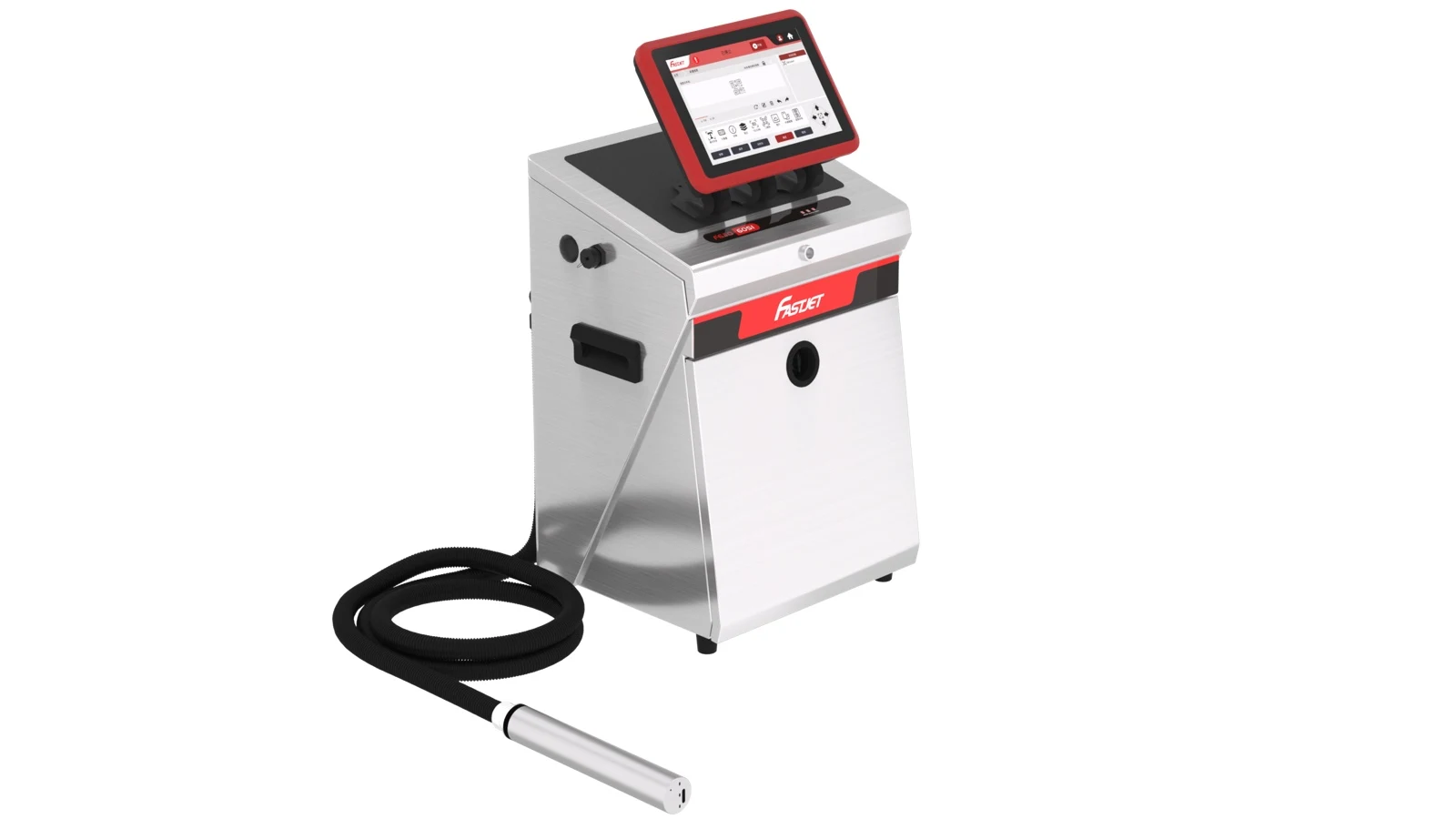
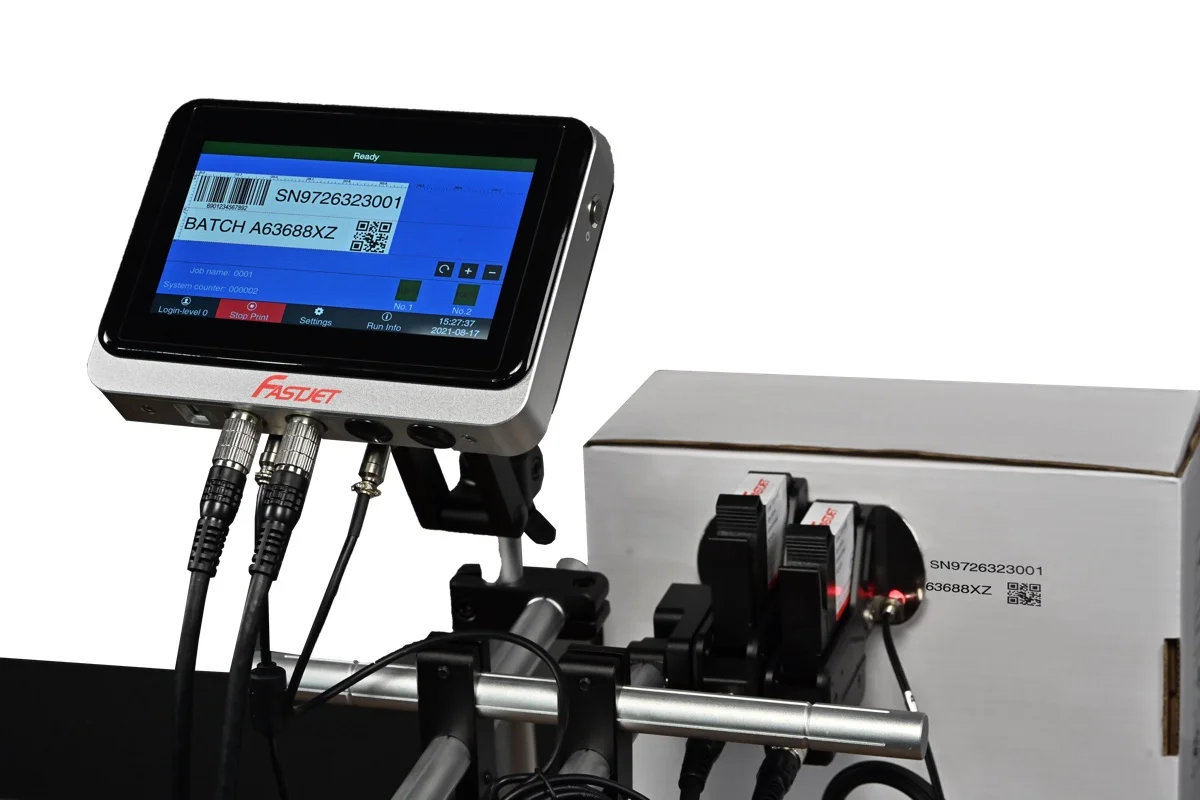
Comparison of the 4 Core Date Coder Ink Families vs Laser Marking
To help engineering, QA, and procurement teams specify the right consumable family, compare the four primary industrial ink chemistries alongside laser coding:
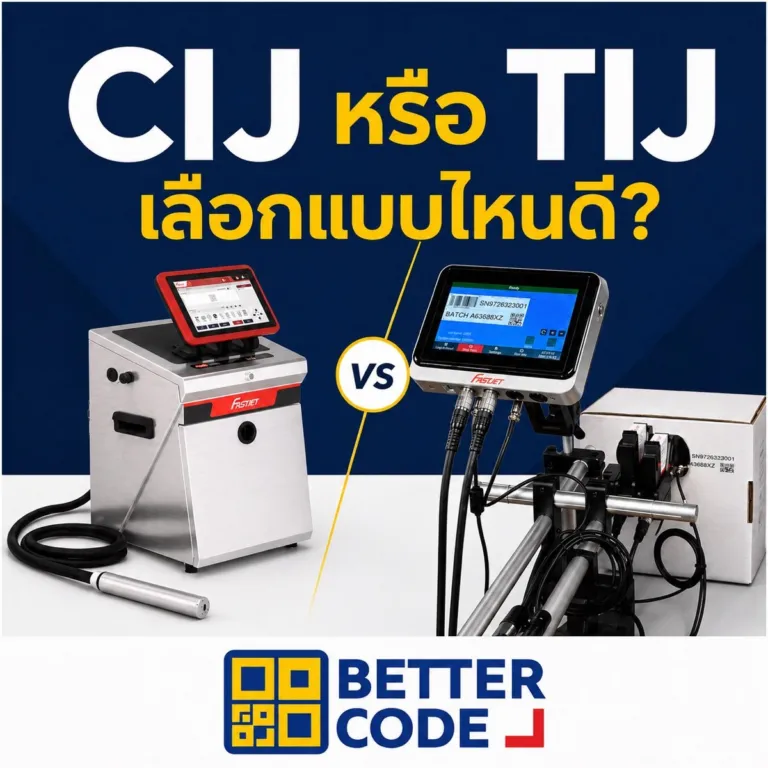
| Engineering Parameter | 1. Dye-Based CIJ Ink (MEK / Ketone / Ethanol) | 2. Pigmented Opaque CIJ Ink (Yellow / White) | 3. TIJ Ink Cartridges (Solvent & Aqueous) | 4. Laser Marking (CO₂ / UV / Fiber) |
|---|---|---|---|---|
| Core Chemistry / Mechanism | Soluble dye + specialized adhesion resin dissolved in fast-flashing MEK or ethanol blend | Micronized opaque pigment particles (white/yellow) suspended in solvent with anti-settling circulation | Sealed 42 mL cartridge with integrated thermal printhead; available in Solvent or Aqueous formulas | Zero ink or chemical solvents (0 THB). Focused optical beam etches or color-changes the substrate |
| On-Pack Dry Time | 0.5 – 2 seconds (Fastest flash-off for high-speed conveyors) | 1 – 3 seconds on dark plastics, metals, glass, and rubber | Solvent: 1–3 sec on foil/films · Aqueous: Instant absorption on paper | Instantaneous (0 seconds). Zero wet ink or roller transfer risk |
| Ideal Substrates & Colors | Light/clear plastics, PET bottles, foil pouches, metal cans, retort pouches, and PE/PP bags | Black plastics, dark amber glass, PVC/PE pipes, cables, and metal components | Pharma cartons, UV-varnished boxes, flat foil webs, labels, and corrugated cases (high-DPI QR/barcodes) | PET bottles, printed cartons, laminated films, metal cans, and PE/PP bags (matched by wavelength) |
| Resistance to Steam, Cold & Chemicals | Excellent when matched to specialty grades (135°C Retort, Condensation, PE/PP Freezer, Alcohol-Resistant) | Superior UV lightfastness, heat resistance, and oil/solvent durability | Strong rub resistance on dry, flat packaging (not intended for heavy standing condensation) | 100% Permanent & Tamper-Proof. Immune to steam, deep freeze, and 95% alcohol wipes |
| Optimal Throw Distance | 5 – 30 mm (Excels on curved bottles, shoulders, and recessed can bottoms) | 5 – 25 mm (Reliable on extruded pipes, cables, and contoured parts) | 2 – 5 mm (Requires flat, guided presentation past the cartridge nozzle) | 100 – 200 mm focal working distance (Flexible mounting clearance) |
Better Code’s 5-Step Ink Adhesion Lab Test Protocol Before Equipment Delivery
To guarantee zero ink adhesion failures after installation, every customer packaging sample sent to Better Code Co., Ltd. undergoes our 5-step engineering validation protocol—complete with physical sample return and video proof for your QA team:
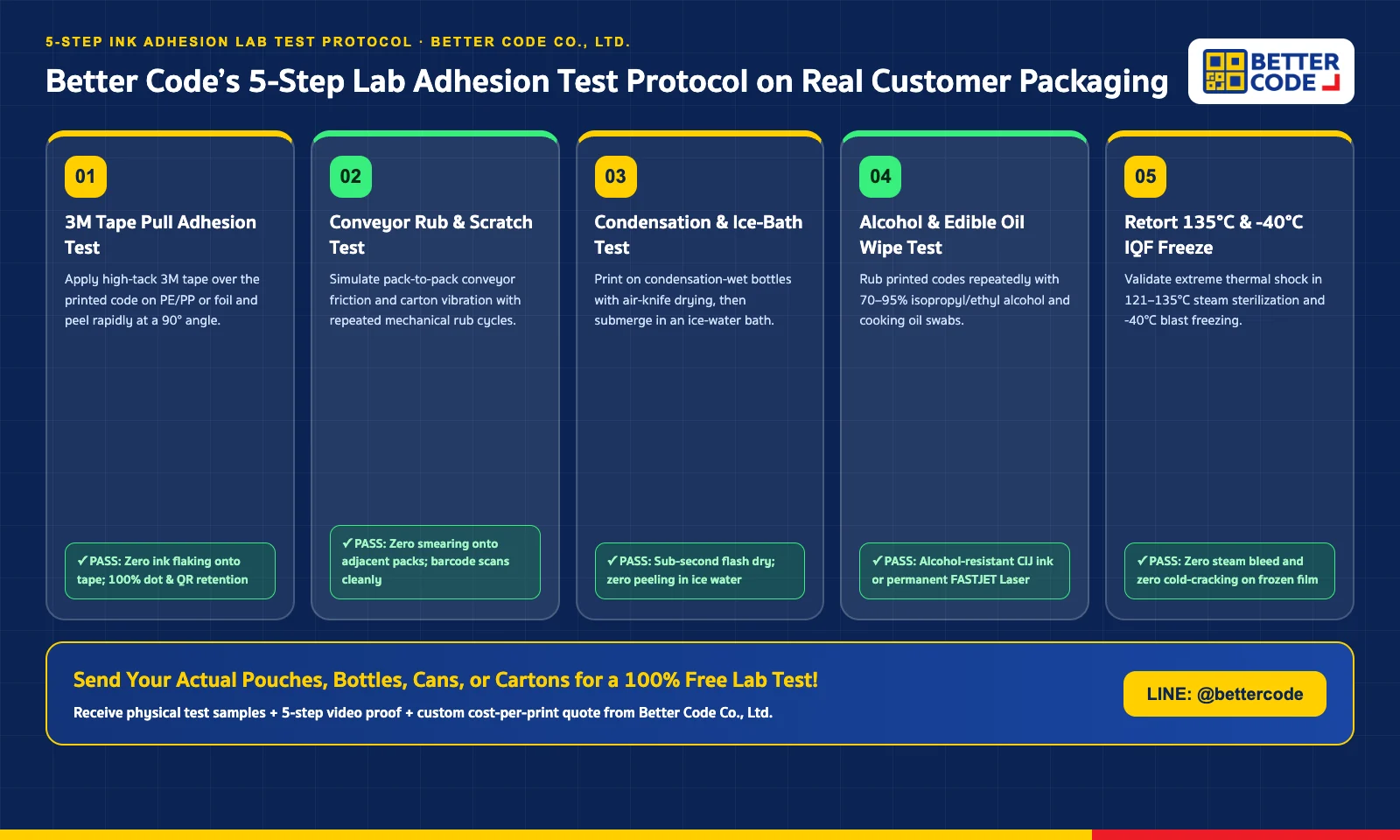
Step 1: 3M Adhesive Tape Pull Test (Cross-Hatch / Direct Peel Validation)
After printing your exact MFG/EXP layout onto actual customer packaging and allowing realistic line dry time (1–3 seconds), our engineers press high-tack adhesive tape firmly over the code and rip it off at a 90-degree angle to inspect for ink transfer.
Step 2: Conveyor Rub, Scratch & Carton Abrasion Test
Simulates pack-to-pack friction along guide rails, accumulation tables, and long-haul corrugated shipping cases through repeated mechanical rub cycles under both dry and damp conditions.
Step 3: Cold-Fill Condensation & Ice-Water Immersion Test
For cold-fill PET bottles, glass beverage bottles, and pasteurized dairy packs, we test printing on condensation-covered surfaces paired with localized air-knife drying, followed by immediate ice-bath submersion.
Step 4: Alcohol, Edible Oil & Chemical Wipe Resistance Test
Food processing, personal care, and pharmaceutical packs often encounter cooking oil mist, animal fat, or 70–95% isopropyl/ethyl alcohol wipe-downs. We rub printed codes with alcohol- or oil-saturated swabs.
Step 5: High-Pressure Retort (121–135°C) & Deep-Freeze (-40°C IQF) Simulation
Validates resin cross-linking under extreme thermal shock—whether pressurized steam sterilization at 121–135°C for 30–90 minutes on retort pouches/cans or -40°C blast freezing on flexible PE/PP bags.
Send Your Packaging Samples for a 100% Free Lab Adhesion Test
Whether you pack retort pouches, condensation-wet beverage bottles, frozen PE/PP bags, or metal cans, send your actual packaging samples to Better Code Co., Ltd. We validate code durability and unit economics side by side (see our Cost-Per-Print Calculator Guide and Rent vs Buy Date Coder Guide):
We print your exact MFG/EXP, lot number, and 2D barcode on your substrates using specialty CIJ inks, Solvent TIJ cartridges, and UV/CO₂/Fiber lasers.
Receive physical test packs and video documentation showing tape-pull, rub, condensation, alcohol wipe, and thermal test results.
Includes a monthly consumable estimate plus side-by-side outright purchase and date coder rental options (3-month minimum).
Frequently Asked Questions: Date Coder Ink Selection & Adhesion
Why does standard date coder ink peel off PE and PP frozen food bags in cold storage?
Polyolefin films (PE, LDPE, HDPE, PP, BOPP) are non-porous plastics with low surface energy (typically below 30–32 dynes/cm). Standard inks sit weakly on top of the polymer chain; when exposed to -18°C to -40°C blast freezing and moisture, film shrinkage causes brittle ink layers to flake off. Solving this requires flexible polyolefin-adhesion MEK inks in a FASTJET F650/F640 CIJ printer or permanent UV laser marking (FASTJET F7100U).
How do beverage plants print clear MFG/EXP dates on condensation-wet cold-fill bottles?
If ink drops hit standing water beads, the water prevents resin bonding to the PET or glass surface. The proven two-part engineering fix is: (1) mount a localized high-velocity Air Knife immediately upstream of the print station to strip water droplets milliseconds before coding, and (2) run a FASTJET F650/F640 CIJ coder loaded with condensation-penetrating MEK ink that flashes dry in 0.5–1 second.
What ink is required for retort pouches and cans sterilized at 121–135°C?
Retort pouches and metal cans subjected to pressurized steam sterilization (121–135°C for 30–90 minutes) require specialized Retort-Grade CIJ Ink formulated with cross-linking thermal resins that resist steam bleed, or Thermochromic Color-Change Ink (which shifts from black to blue or red upon reaching sterilization temperature to give QA teams instant visual verification).
What is the best date coding solution for dark amber bottles, black plastics, and metal cans?
Black dye inks disappear on dark glass, black PE pipes, or dark-lacquered cans. For high-contrast visibility, use opaque Yellow or White Pigmented CIJ Ink or a FASTJET F7100F Fiber / F7100C CO₂ Laser that etches a permanent, high-contrast mark directly into the coated metal or glass surface.
Can Thermal Inkjet (TIJ) cartridges print permanently on foil pouches and laminated films?
Yes—provided you use fast-drying Solvent-Based TIJ Cartridges in a FASTJET F3511, F3541, or S510 coder and maintain a 2–5 mm throw distance over a flat film web or carton flap. Solvent TIJ inks bond strongly to aluminum foil, PET/CPP laminates, and UV-varnished pharma boxes with zero make-up evaporation.
Can we send our actual packaging to Better Code Co., Ltd. for a free ink adhesion test before renting or buying?
Absolutely. Send your pouches, bottles, cans, or cartons to Better Code Co., Ltd. along with your post-print process details (retort, blast freezer, ice bath, or alcohol wipe). Our engineering lab will run our 5-step adhesion test across CIJ, TIJ, and Laser systems and return physical test samples, video proof, and a quotation free of charge.
Book a Free Packaging Ink Adhesion Test with Better Code Co., Ltd.
Tell us about your substrate and post-print process. Better Code Co., Ltd. will match the exact date coder ink or Laser system to guarantee 100% adhesion, complete with purchase and rental quotations.
Request Free Sample Test & Quote ↗Explore Date Coder Inks & Make-Up ↗Send Packaging Photo on LINE @bettercode ↗Technical References & Testing Scope
- Industrial coding ink chemistry selection (MEK, Ethanol, Pigmented, Thermochromic, Solvent TIJ) and 5-step adhesion lab validation standards: Application Engineering Department, Better Code Co., Ltd.
- Technical specifications for FASTJET F650 / F640 (CIJ), FASTJET F3500 Series / S510 (TIJ), and FASTJET F7100 Series (CO₂ / UV / Fiber Laser).