Machine Vision Inspection Camera Price: 8 Factors That Set the System Budget
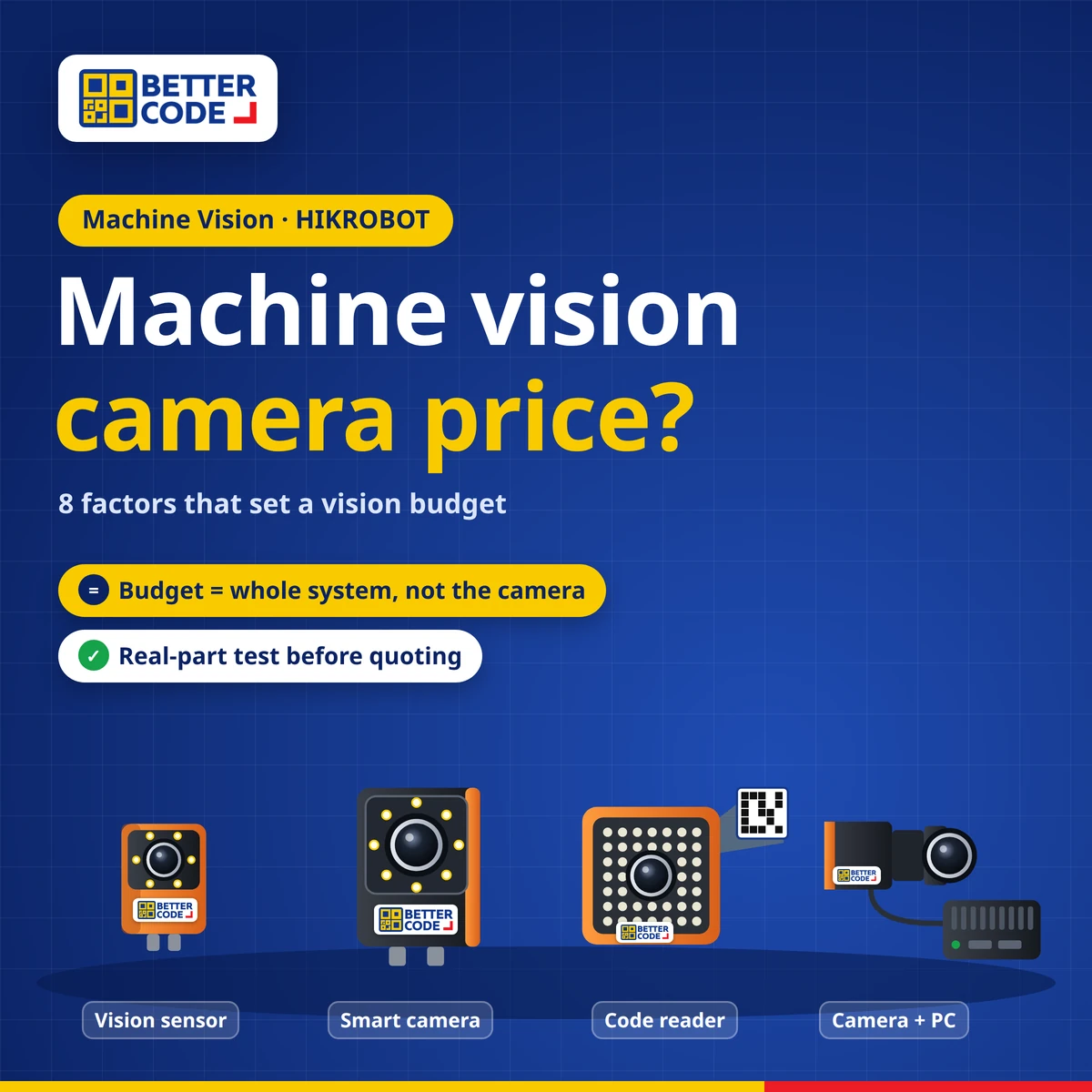
There is no single price for a machine vision inspection camera, because the real budget is the whole system, not just the camera. It depends on eight factors: camera type (vision sensor, smart camera, code reader or industrial camera + PC) · resolution and the smallest detail to detect · lens and lighting · line speed · number of inspection points and cameras · software complexity such as deep learning · PLC integration and rejection · and installation, training and after-sales service. The most accurate way to get a price is to have real samples tested before quoting.
Why is there no single price for a vision inspection camera?
The same camera model can handle a simple job, such as checking that a cap is present, or a hard one, such as finding small defects on a glossy surface. The difference lies in the lens, lighting, software, line speed and what must happen when a defect is found. A quotation that only shows the camera price rarely matches the real budget, so think of it as the budget for a system that inspects reliably on your production line.
Eight factors that set a vision system budget
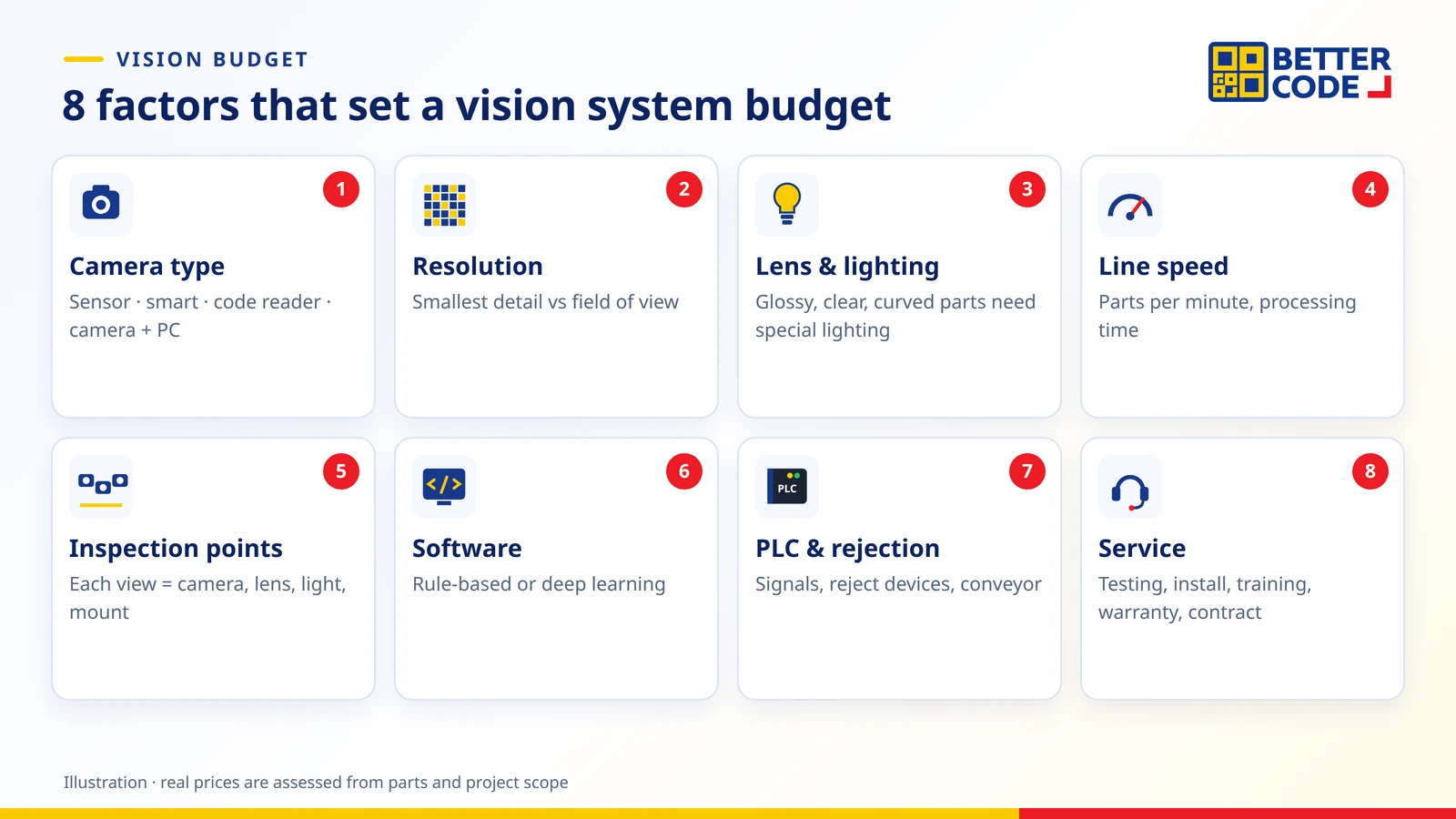
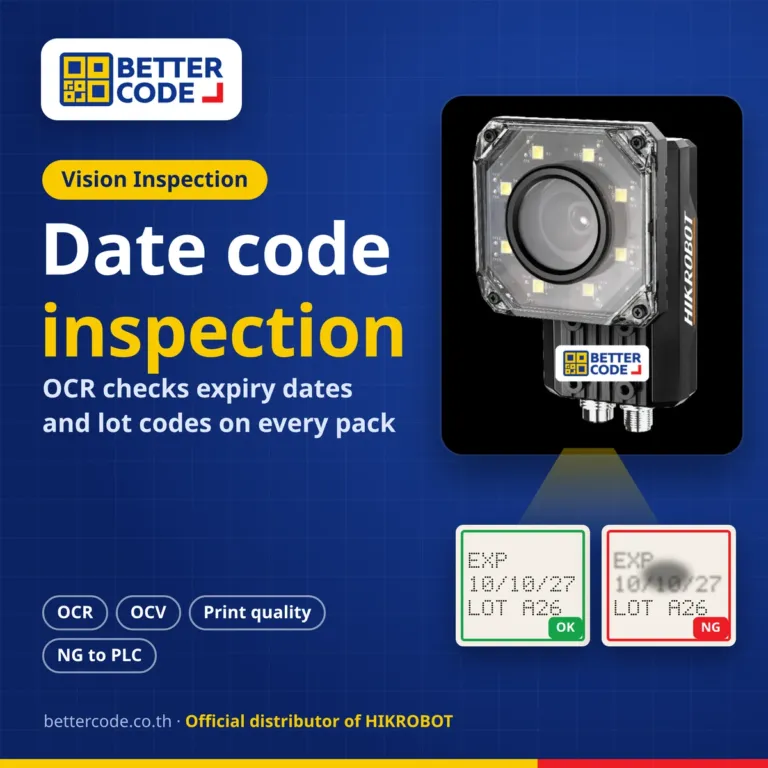
- Camera type: a vision sensor suits clear single-point checks, a smart camera handles several checks in one image, a code reader reads barcodes and QR codes, and an industrial camera + PC supports multi-camera, precise measurement and deep learning. More complex jobs need larger systems.
- Resolution and smallest detail: the smaller the defect relative to the field of view, the higher the resolution needed, or the area must be split across cameras. See defect detection cameras and dimension measurement cameras.
- Lens and lighting: the right lighting makes defects or edges visible and inspection stable. Glossy, transparent or curved surfaces often need specialised lighting.
- Line speed: parts per minute and conveyor speed affect the camera, triggering and the processing time available.
- Inspection points and cameras: one side or all around, one line or several. Each added view means another camera, lens, light and mount.
- Software complexity: rule-based jobs such as measuring or locating are more straightforward, while highly variable products may need deep learning, which requires image collection and training.
- PLC integration and rejection: if the system must reject defects automatically, include PLC signals, pushers or air jets, and possible conveyor changes.
- Service: real-sample testing, installation, training, warranty and after-sales service contracts.
What does a vision system budget include?
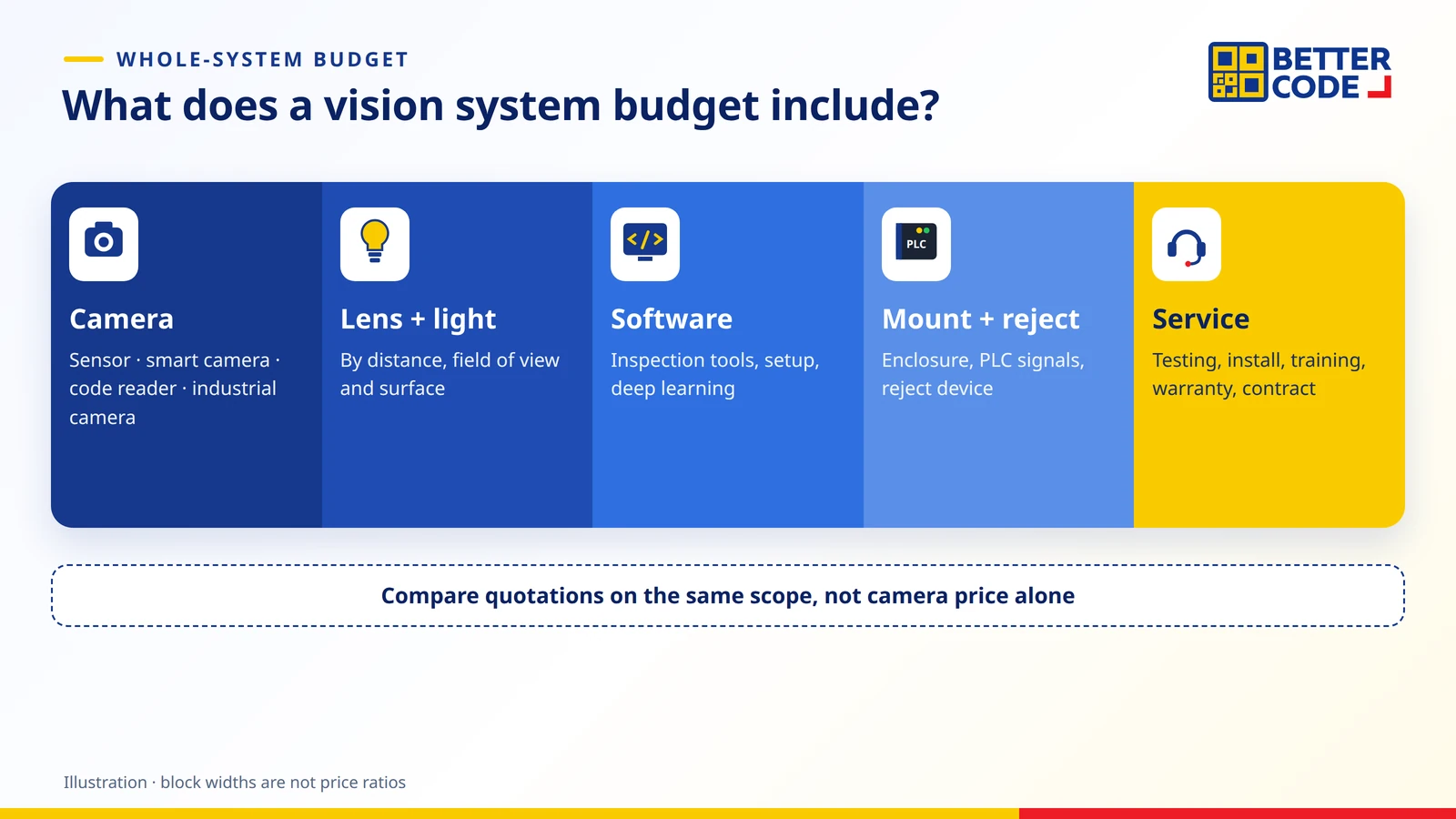
| System part | What it covers | Budget rises when |
|---|---|---|
| Camera | Vision sensor, smart camera, code reader or industrial camera | High resolution, several cameras or high speed are needed |
| Lens and lighting | Lens for distance and field of view; lighting for the surface | Surfaces are glossy, transparent, curved, or ambient light interferes |
| Software and setup | On-camera tools or PC software | Many conditions, precise measurement or deep learning |
| Mounting and rejection | Brackets, enclosures, PLC signals, reject devices | Automatic rejection or conveyor and feeder changes are needed |
| Service | Sample testing, installation, training, warranty, service contract | Several lines or sites, or ongoing support is required |
How to reduce the budget without losing accuracy
- Start with the costliest inspection point, such as wrong expiry dates or labels, then expand.
- Size the camera to the job: a clear single-point check may use a vision sensor instead of a PC system.
- Keep parts in the same position with guides or fixtures for easier setup and stable results.
- Invest in lighting early; good lighting keeps software simple.
- Test before buying with real good and defective parts to avoid changing equipment later.
How to judge the return
Compare the system budget with the current cost of inspection: inspectors per shift, defects reaching customers, claims or recalls, and line stops caused by quality issues, plus added benefits such as image records and defect data for process improvement. These figures differ in every factory, so use your own line data.
What to prepare for a quotation
- Photos or videos of the product, with real good and defective parts
- What must be inspected: defects, dimensions, position, dates or codes
- Line speed, parts per minute and available mounting positions
- What should happen on a defect: alarm, line stop or automatic rejection
Summary
The price of a vision inspection camera depends on the whole system, not just the camera. The main factors are camera type, resolution, lens and lighting, line speed, inspection points, software, PLC integration and rejection, and service. Start with the most important inspection point, size the camera to the job, and test with real parts before deciding.
Frequently asked questions about vision camera prices
How much does a machine vision inspection camera cost?
It depends on the whole system: camera type, resolution, lens, lighting, line speed, number of inspection points, software, PLC integration and rejection, and service, so it must be assessed from real parts and requirements before quoting.
Why do vision system quotations vary so much?
Because their scope differs. Some include only the camera; others include lens, lighting, mounting, PLC integration, rejection, installation, training and after-sales service. Align the scope before comparing prices.
Is a vision sensor cheaper than a smart camera?
Vision sensors generally handle simpler checks, while smart cameras handle several conditions in one image. Choose by the task, not price alone, because an under-sized camera will not inspect reliably.
Is deep learning more expensive than a standard system?
It usually needs more processing hardware and image collection for training, so it suits highly variable products that are hard to inspect with rules. Clearly rule-based jobs usually do not need it.
What costs are there besides the camera?
Lens, lighting, brackets, enclosures, software, PLC integration, reject devices, installation, training and after-sales service contracts.
Can I test with real parts before buying?
Yes. Better Code tests real samples before quoting to confirm the camera can see and inspect the job before you invest.
What information is needed for a quote?
Product photos or videos, good and defective parts, what to inspect, line speed, mounting position and what should happen when a defect is found.
Sources
- Better Code – vision inspection service process (assessment, real-sample testing, equipment selection, installation and after-sales support)
- HIKROBOT – machine vision product groups: vision sensors, smart cameras, code readers and industrial cameras
Want a vision system budget for your line?
Send product photos, defective samples, what to inspect and your line speed. Better Code will assess the job, test real parts and quote to the agreed scope.