BETTER CODE · INDUSTRIAL CODING KNOWLEDGE
Choosing an Industrial Date Coding Printer
Begin with the product and print position, define the data and speed, compare CIJ, TIJ, laser and TTO, then test actual samples and assess long-term support.
Describe the material and surface
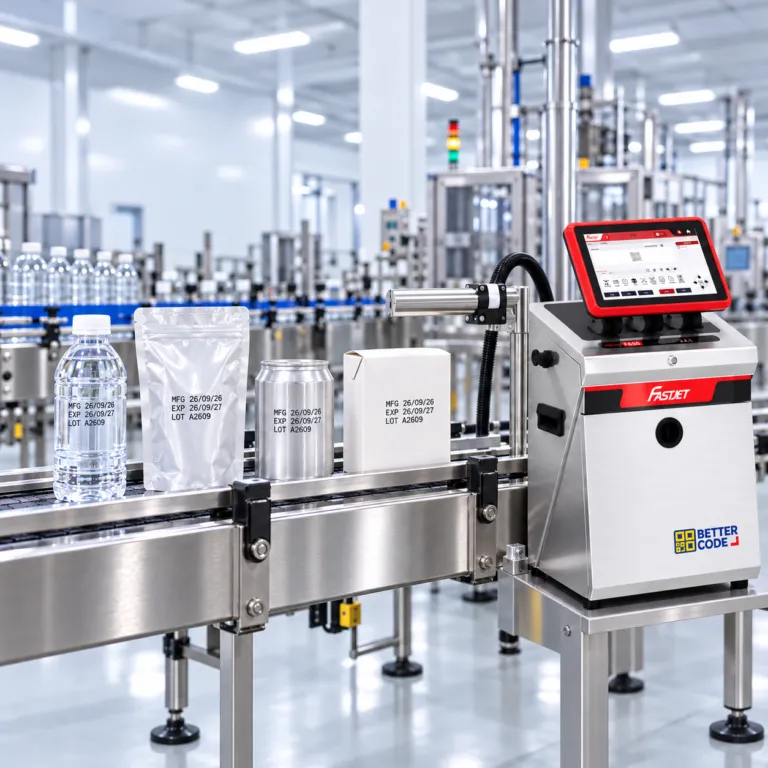
Plastic, paper, glass and metal respond differently. Provide colour, shape, curvature, print space and the condition at the printing point, including condensation on chilled bottles. Test clarity and adhesion on real samples.
Define the print requirement
Specify the exact text, date format, lot number, barcode or QR data, number of lines and available area. State normal and maximum line speeds and product spacing. A headline machine speed is not a guarantee for every message.
Compare technologies
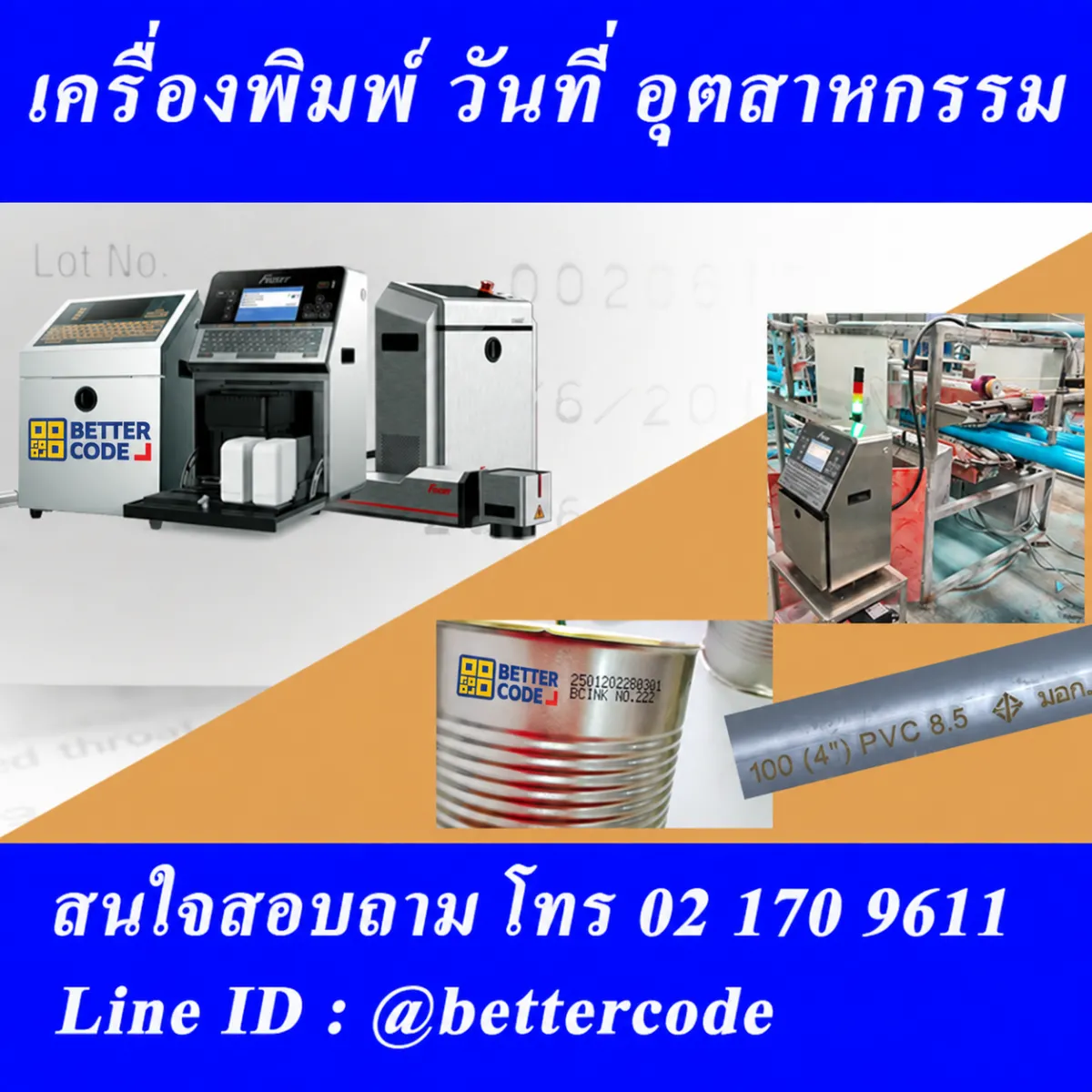
CIJ provides non-contact inkjet coding. TIJ can deliver crisp text and codes with suitable ink and controlled head distance. Laser creates marks without ink on compatible materials. TTO is a thermal-transfer approach for appropriate packaging-machine and film applications. Each has installation and material limits.
Include inspection and maintenance
Assess consumables, cleaning, spare parts and operator training. If missing or incorrect codes must be detected, evaluate a vision camera or code reader and the required alarm or reject process.
Send a useful enquiry
Share product photos, actual packaging, message files, speed and a view of the production area. Better Code can then assess a practical printing method, mounting arrangement and test scope.
Frequently asked questions
Can one printer handle every material?
Do not assume universal compatibility. Test each material and surface with the intended ink or laser settings.
Should price be the starting point?
Set the required print quality and production conditions first, then compare the total cost of suitable systems.