BETTER CODE · INDUSTRIAL CODING KNOWLEDGE
CIJ, TIJ or Laser? A Practical Coding Technology Comparison
The right coding technology depends on material, message, production speed and the required durability. Compare real printed or marked samples rather than selecting from a technology name alone.
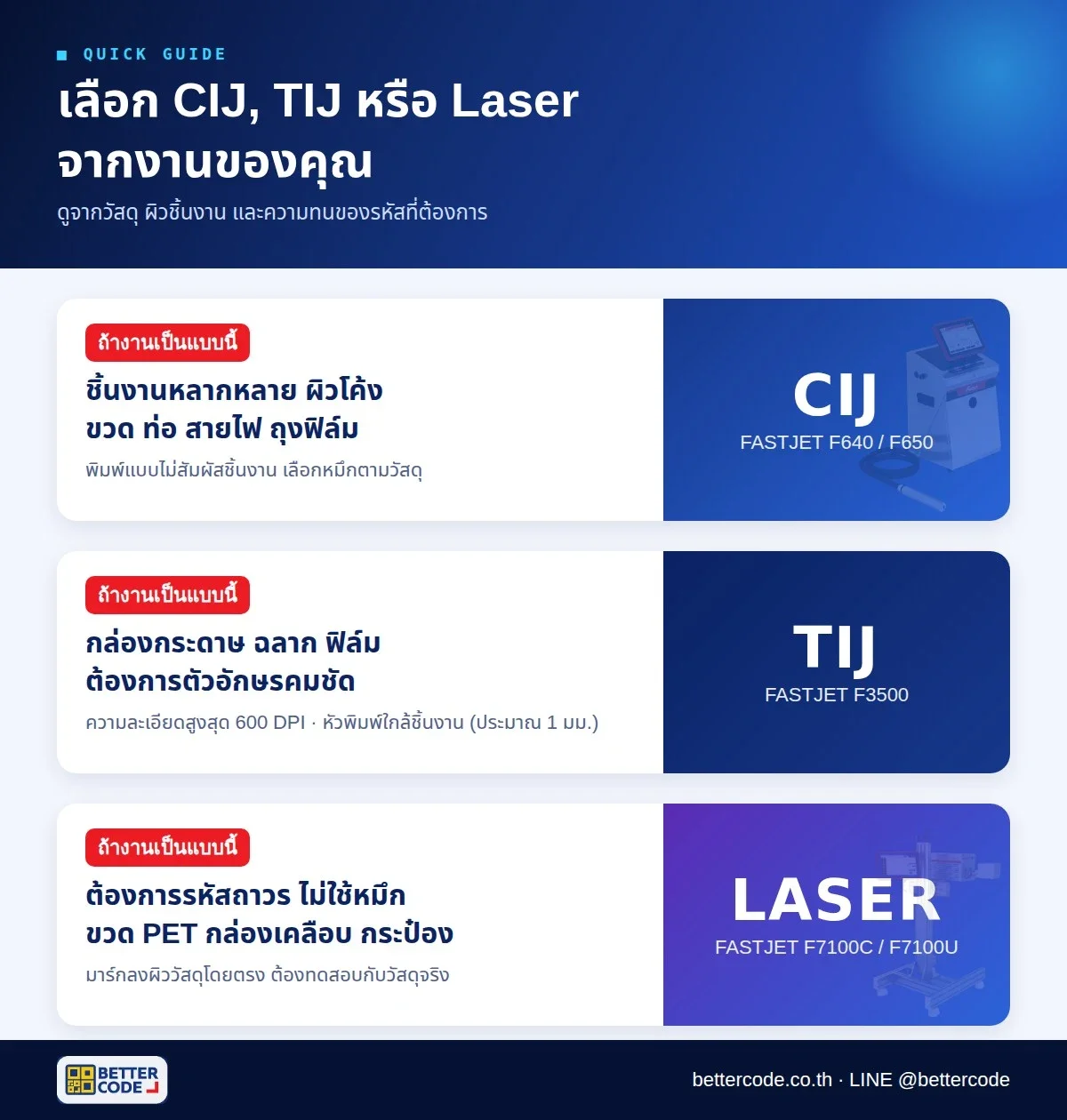
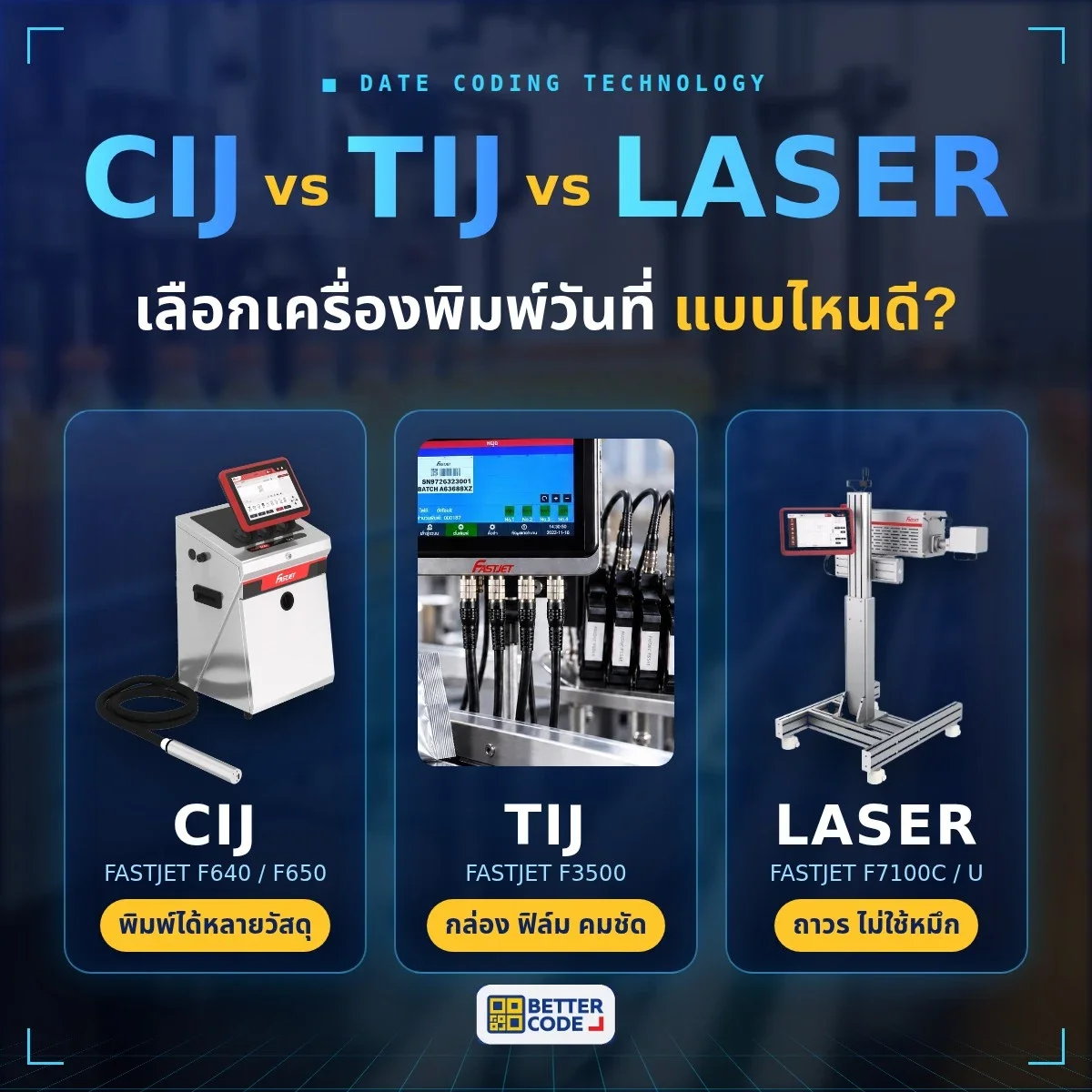
CIJ: continuous non-contact inkjet
CIJ is commonly assessed for dates and lot codes on moving products, including curved packaging. Ink compatibility, drying, adhesion and environmental conditions remain essential to the result.
TIJ: crisp text and codes
TIJ is a useful option for cartons, labels and suitable films where a stable printhead gap can be maintained. Select cartridge ink for the surface and test the actual message and barcode dimensions.
Laser: marking without ink
CO₂, UV and fiber lasers have different interactions with substrates. Select wavelength and power from material trials, mark contrast, integrity and speed. Ink-free marking still requires the right installation and maintenance plan.
Compare the whole operating cost
Consider equipment, consumables, cleaning, service, production interruptions, operator training and inspection. Use the same message and line conditions when comparing cost per acceptable product.
Make a decision from evidence
Send actual packaging and the complete data to be printed. Test at production speed, check downstream durability and scan codes using the intended equipment. Confirm installation, support and acceptance criteria before ordering.
Frequently asked questions
Is laser always better than inkjet?
No. The best choice depends on whether the substrate marks clearly, the required speed and the overall process.
Can all three print variable data?
Supported data and interfaces depend on the specific model and software. Check the required format and workflow before selecting.