BETTER CODE · INDUSTRIAL CODING KNOWLEDGE
How to Start Selecting a Factory Inspection Camera
Start with what must be inspected, good and defective samples, line speed, and what should happen when a defect is found. Those requirements determine the camera system.
Turn the problem into an inspection rule
Examples include missing components, incorrect labels, unreadable dates and wrong lot numbers. Define measurable pass/fail conditions rather than asking a camera to find every possible defect.
Prepare representative samples
Include normal variation as well as defects. Changes in colour, reflections, product position and packaging can affect results. The trial should reflect the conditions on the actual line.
Assess the installation
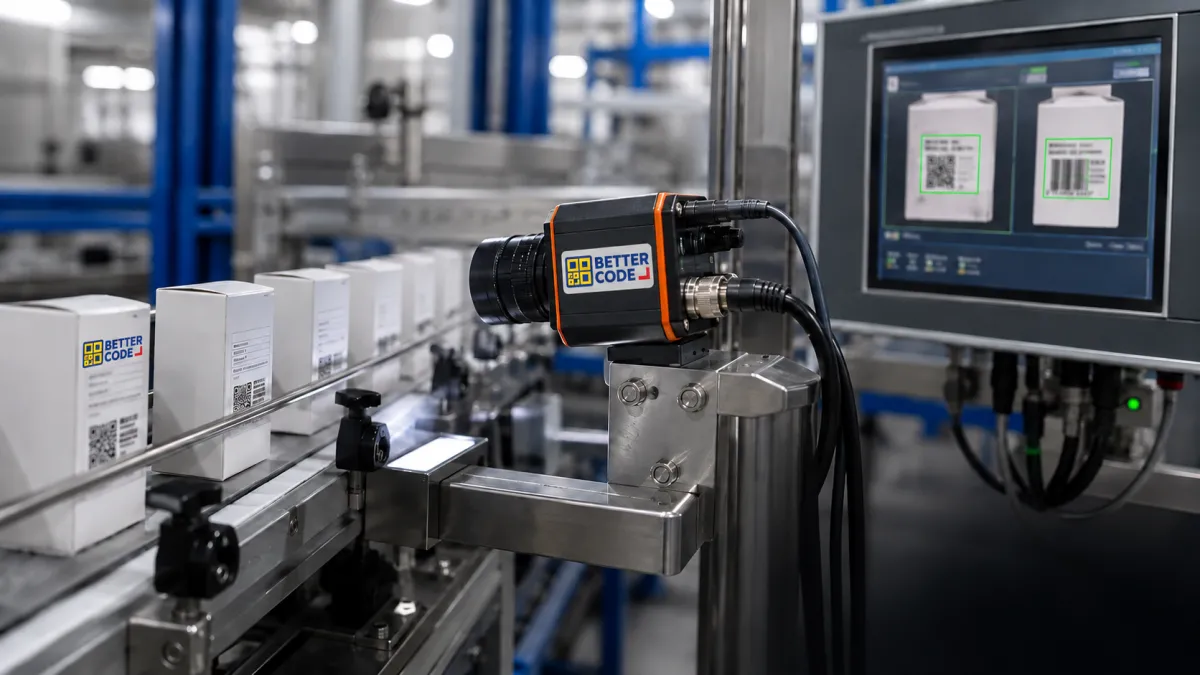
Measure the available space, working distance, field of view and product speed. Choose lighting and lenses to reveal the feature consistently. Coordinate triggering with sensors and the product's position.
Plan the response
Specify the alarm, reject action or operator workflow. Track the product from inspection to rejection and agree how inspection images and results should be recorded, accessed and reviewed.
Test before finalising equipment
Evaluate correct detections, missed defects and unnecessary rejects at operating speed. Train staff to use approved settings and manage product changeovers. Confirm the supported inspection scope and acceptance criteria before commissioning.
Frequently asked questions
Can the system inspect every product?
It can be designed for continuous inspection, but the required coverage and performance must be verified at actual line speed.
What should I send first?
Send photos, pass/fail samples, the feature to inspect, line speed and the required action for a failed item.